





Karachi (HRNW)- Federal Minister for the Board of Investment Qaiser Ahmed Sheikh has said that if Pakistan wants to significantly increase its exports, it must focus on the development and promotion of Karachi as the country’s economic hub.
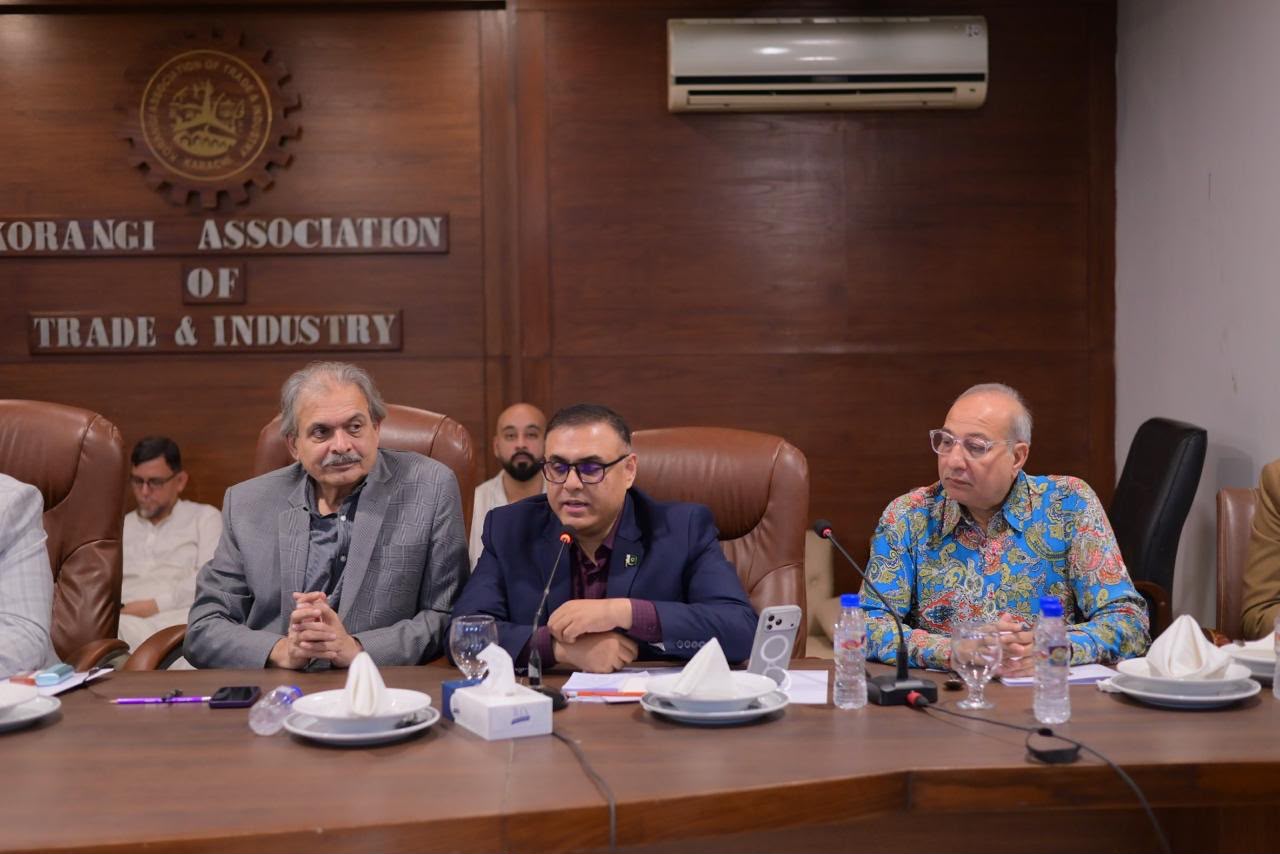
Addressing a meeting at the Korangi Association of Trade and Industry (KATI), the minister said that China is seriously considering investment opportunities in Pakistan, but many Chinese investors remain hesitant to come to Karachi due to security and business-related concerns.
He said that the Prime Minister has abolished the super tax on exporters in the latest budget, but challenges such as delays in sales tax refunds and high energy costs still need to be addressed.
Qaiser Ahmed Sheikh stated that the government’s stance on issues related to the Federal Board of Revenue (FBR) remains unchanged. He added that a financial center has been established in Islamabad and that increasing exports is the government’s top economic priority. He also noted that interest payments on Rs8 trillion in public debt remain the government’s largest expenditure.
The federal minister said that the Special Investment Facilitation Council (SIFC) is playing a positive role in attracting investment. He revealed that, in collaboration with the Sindh government, a 6,000-acre Special Economic Zone (SEZ) is being developed on the land of the Pakistan Steel Mills.
He further said that businesses operating in the Steel Mills Economic Zone will enjoy zero customs duty for 10 years. According to him, although the IMF initially opposed granting zero-rating to the SEZ, the government successfully convinced the Fund after extensive negotiations.
Qaiser Ahmed Sheikh also said that Pakistan’s international image has improved due to its efforts for peace. He claimed that while India had attempted to portray Pakistan negatively on the global stage, Pakistan is now being recognized as an advocate of peace.
Addressing the gathering, KATI President Ikram Rajput expressed concern over the current business environment, questioning why investors would invest under existing conditions. He highlighted the ongoing energy crisis affecting industries and said that many factories have already shut down.
He added that it has become increasingly difficult for industrialists to establish new businesses and criticized the presence of decision-makers who, according to him, have little connection with industry or the economy.
Support independent journalism and humanitarian reporting by making a donation. Your contribution helps us continue delivering credible news and impactful stories. Donate here: www.hrnww.com/?page_id=1083