

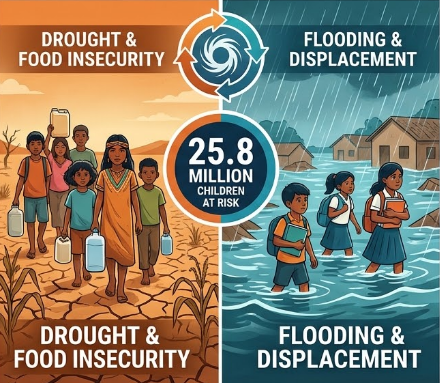


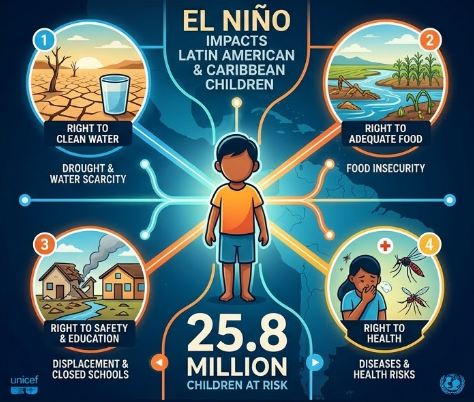
PANAMA CITY, PANAMA (HRNW) — UNICEF is warning that at least 25.8 million children across Latin America and the Caribbean are exposed to climate-related risks associated with the current El Niño conditions.
UNICEF issued the warning on September 30 as governments and humanitarian organizations prepare for potential droughts, floods and other extreme weather events.
The agency estimates that approximately one in seven children in the region could be exposed to El Niño-related climate hazards.
The effects are expected to vary significantly between countries and communities.
Some areas face increased risks of drought and water shortages, while others could experience heavy rainfall and flooding.
UNICEF said children are particularly vulnerable because climate shocks can disrupt access to healthcare, education, safe water and adequate nutrition.
Flooding can damage schools, health centres, roads and sanitation systems.
Drought can reduce access to safe water and contribute to food insecurity and malnutrition.
Children living in poverty, remote communities and areas affected by displacement can face additional risks when disasters occur.
UNICEF is working with governments and humanitarian partners to strengthen preparedness and improve early-warning and emergency-response systems.
The agency said planning before extreme weather events can reduce disruption to essential services.
UNICEF is also encouraging authorities to ensure that children are considered in national climate-adaptation and disaster-preparedness measures.
The organization said climate-related emergencies can have long-term effects on children’s education, health and wellbeing.
Schools may be forced to close temporarily following floods, while damaged water systems can increase the risk of disease.
UNICEF is urging governments and international partners to maintain funding for child-focused climate resilience and humanitarian preparedness.
The agency said investments in resilient schools, healthcare, water systems and social protection can help communities respond more effectively to climate shocks.
The latest assessment comes as countries across the region prepare for potentially significant weather disruptions during the months ahead.
Support Appeal
HRNW appeals to readers, civil society organizations, governments and human-rights supporters to strengthen independent human-rights journalism and public awareness through the World’s No.1 dedicated Human Rights News Agency.
Support HRNW – World’s No.1 dedicated Human Rights News Agency
Disclaimer
This article is based on UNICEF’s September 30, 2026 regional assessment concerning children’s exposure to El Niño-related climate risks. The figures and projections are attributed to UNICEF and may change as weather conditions and national assessments develop.
