




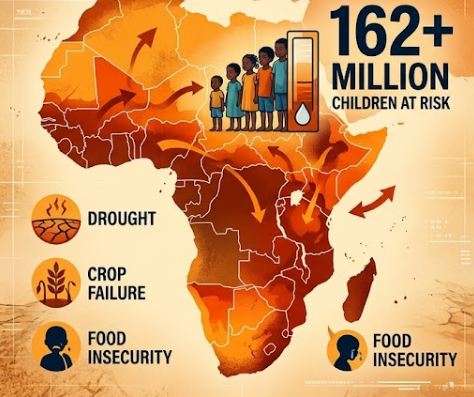
NAIROBI, KENYA (HRNW) — UNICEF has warned that strengthening 2026–2027 El Niño conditions could expose more than 162 million children across Eastern and Southern Africa to worsening drought, extreme heat and flooding.
In an assessment published September 1, UNICEF said more than two-thirds of children in the region live in areas exposed to the potential impacts of the climate phenomenon.
The organization warned that climate shocks could worsen food and water insecurity, malnutrition, disease risks, disruption to education and threats to children’s safety across countries including Somalia, Ethiopia, South Sudan, Kenya, Uganda, Zimbabwe, Zambia, Malawi and Mozambique.
UNICEF said Somalia could see flooding affect up to 2.5 million people under the most severe scenario, potentially disrupting access to food, healthcare, safe water and education.
The organization is urging governments and donors to act before the most severe impacts occur, including by pre-positioning nutrition and medical supplies, strengthening water and sanitation systems and protecting schools.
UNICEF said less than one percent of international humanitarian assistance is currently available for anticipatory action and is seeking US$173 million within its existing 2026 humanitarian requirements to support preparedness and life-saving assistance across 13 priority countries.
The warning highlights a growing human-rights concern: climate-related disasters can disproportionately affect children who already face poverty, displacement, hunger and limited access to essential services.
UNICEF is urging international partners to invest before disaster conditions peak, arguing that early action can save lives and reduce the scale and cost of future humanitarian crises.
Support Appeal:
Support the World’s No.1 dedicated Human Rights News Agency – HRNW in reporting children’s rights, climate justice, humanitarian emergencies and the impact of disasters on vulnerable communities.
Support HRNW – World’s No.1 dedicated Human Rights News Agency
Disclaimer:
This report is based on UNICEF’s regional assessment and publicly available humanitarian information. Climate forecasts and humanitarian conditions may change. HRNW presents this information for public-interest journalism and human-rights awareness.