


New York, United States (HRNW): The International Rescue Committee (IRC) has expanded its humanitarian response across several conflict-affected regions, warning that escalating violence, displacement, and declining international humanitarian funding continue to place millions of vulnerable people at risk. In its latest updates, the organization reaffirmed its commitment to delivering life-saving assistance while urging the international community to increase support for populations facing prolonged crises.
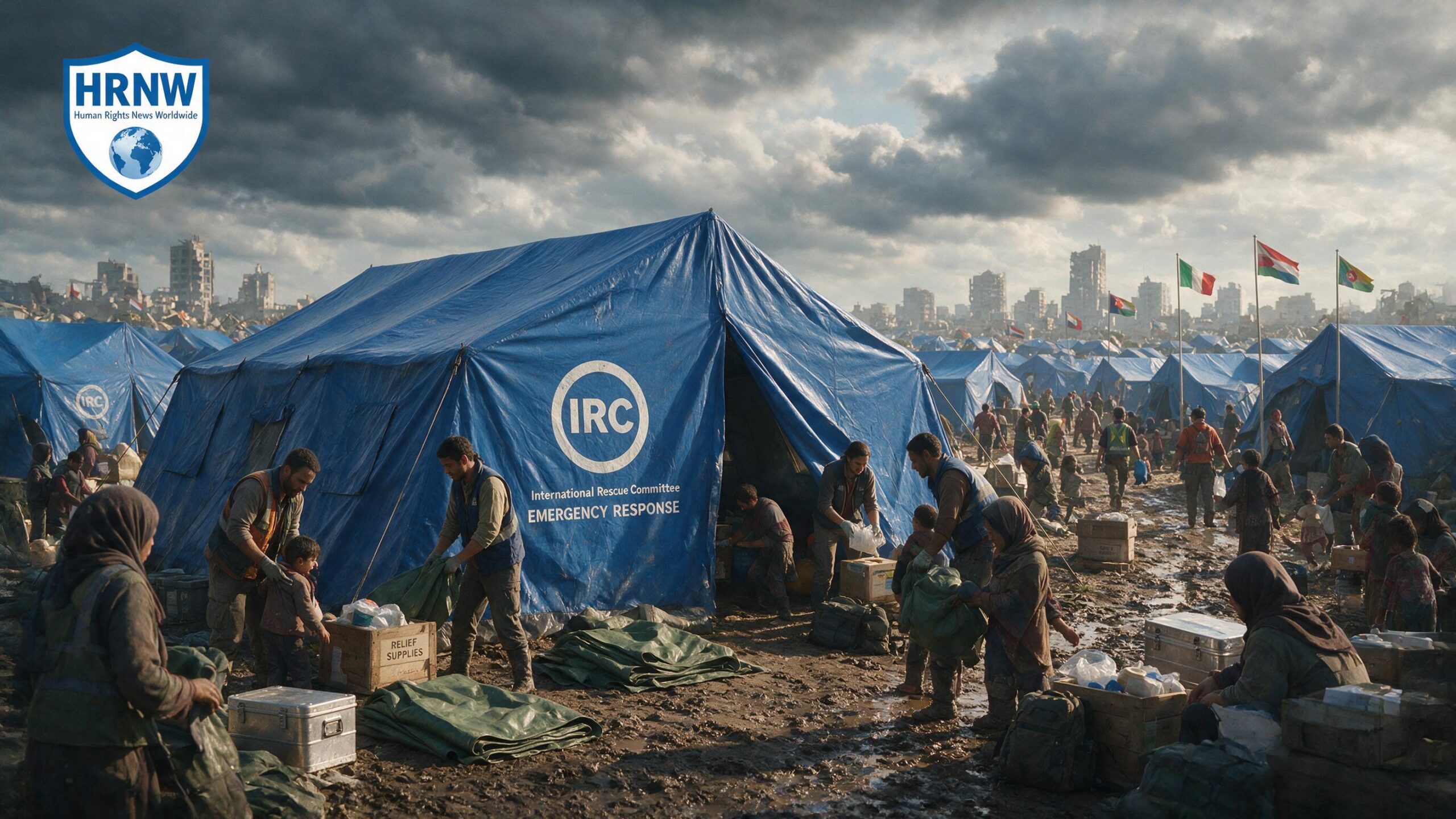
The IRC continues to provide emergency assistance in some of the world’s most severe humanitarian emergencies, including Sudan, Gaza, the Democratic Republic of the Congo, Afghanistan, Ukraine, Syria, and Yemen. Its programmes include emergency healthcare, nutrition services, clean water, sanitation, education, protection for women and children, and economic recovery initiatives designed to help displaced families rebuild their lives.
In a recent humanitarian update, the IRC described Sudan as the world’s largest humanitarian crisis, with millions of people displaced and in urgent need of food, medical care, and protection. The organization has expanded cross-border operations and continues working with local partners to reach communities affected by conflict while advocating for greater humanitarian access and increased international assistance.
The organization has also intensified relief operations in Gaza by delivering emergency medical supplies, primary healthcare, protection services, clean water, and psychosocial support to civilians affected by the ongoing humanitarian crisis. The IRC has called for sustained humanitarian access and stronger international efforts to protect civilians and ensure the delivery of essential aid.
Beyond emergency response, the IRC continues implementing long-term resilience programmes that support education, women’s economic empowerment, refugee integration, and climate adaptation. These initiatives are designed to help crisis-affected communities recover while strengthening local institutions and improving opportunities for sustainable development.
The organization recently highlighted findings from its 2026 Emergency Watchlist, which identifies countries most at risk of worsening humanitarian crises. According to the IRC, declining humanitarian funding, prolonged armed conflicts, climate-related disasters, and political instability are creating increasingly complex emergencies that require coordinated international action. The report urges governments, donors, and international organizations to prioritize humanitarian assistance and conflict prevention.
Founded in 1933, the International Rescue Committee operates in more than 40 countries, delivering humanitarian assistance, supporting refugees and displaced populations, strengthening health systems, promoting education, and advancing protection programmes for vulnerable communities. The organization works closely with governments, local civil society organizations, and international partners to provide both emergency relief and long-term recovery assistance.
Humanitarian experts observe that sustained international cooperation remains essential to addressing today’s interconnected humanitarian challenges. Continued investment in emergency response, community resilience, and protection programmes can help save lives while supporting long-term peace, stability, and human dignity in regions affected by crisis.
Support Appeal
Support the World’s No.1 dedicated Human Rights News Agency to enhance its mission of promoting justice, equality, peace, democracy, and human dignity worldwide. Your generous contribution enables HRNW to continue publishing independent, credible, and timely human rights news while highlighting the vital work of humanitarian organizations serving vulnerable communities across the globe.
Support HRNW: https://www.hrnww.com/?page_id=1083
Disclaimer
This HRNW news report has been prepared using publicly available information released by the International Rescue Committee (IRC) and other reliable public sources. It is published solely for news and informational purposes. HRNW maintains complete editorial independence, and publication of this report does not necessarily imply endorsement of the views, policies, or positions of the organizations mentioned. Readers are encouraged to consult official IRC publications for comprehensive and up-to-date information regarding its humanitarian programmes, advocacy initiatives, and emergency response activities.