



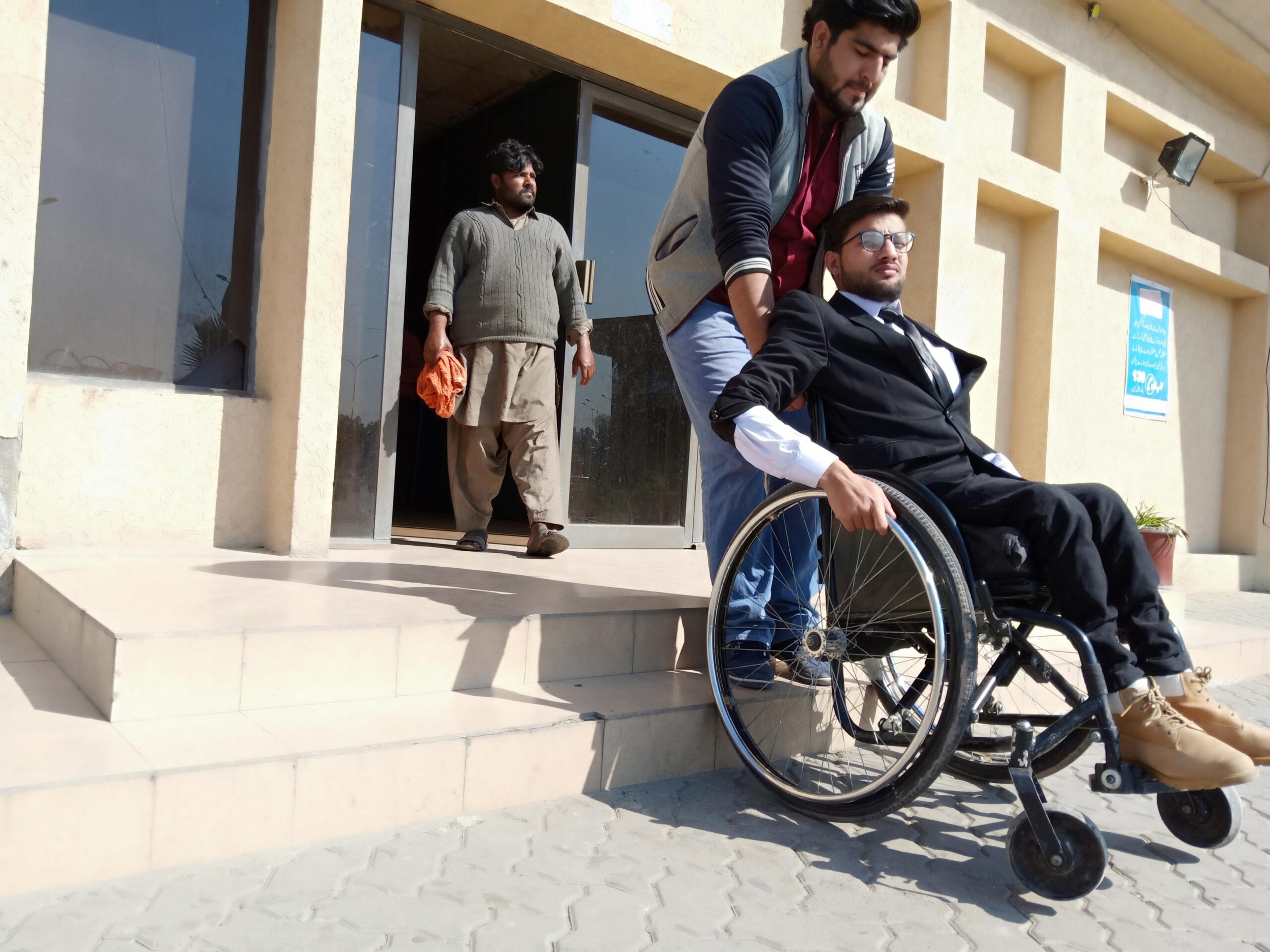
Karachi (HRNW): Although the Government of Sindh has introduced various laws, policies, and welfare initiatives aimed at improving the lives of Persons with Disabilities (PWDs), experts and stakeholders say that many public facilities across Karachi and other parts of Sindh remain inaccessible, limiting the ability of persons with disabilities to participate fully in society.
According to social development experts, an accessible environment is not a privilege but a fundamental human right. However, many government offices, hospitals, educational institutions, parks, bus stops, and other public buildings continue to lack essential accessibility features such as wheelchair ramps, accessible elevators, Braille signage, audio guidance systems for people with visual impairments, accessible washrooms, and other assistive facilities.
Persons with disabilities and their families report that visiting government institutions often becomes a difficult and stressful experience due to the absence of barrier-free access. Wheelchair users frequently face physical obstacles, while people with visual impairments have limited access to navigation assistance. Likewise, individuals with hearing impairments often encounter a shortage of sign language interpretation and other accessible communication services.
Experts emphasize that greater transparency is needed in the planning, implementation, and monitoring of budgets and development projects allocated for disability inclusion. They recommend independent evaluations, regular financial audits, third-party monitoring, and public reporting mechanisms to ensure that public resources are used effectively and that accessibility initiatives produce measurable results.
Governance specialists further stress that universal accessibility should be incorporated into the design phase of every new government development project, hospital, educational institution, public park, bus stop, and public building. They argue that integrating accessibility standards from the outset is more effective and cost-efficient than retrofitting facilities after construction has been completed.
Civil society organizations also note that supporting persons with disabilities should extend beyond financial assistance. Ensuring equal access to education, healthcare, employment, transportation, and public services is both a constitutional and moral responsibility of the state. They maintain that genuine inclusion cannot be achieved unless public infrastructure and services are designed to accommodate people of all abilities.
Experts have called upon the Government of Sindh, local government authorities, and relevant departments to ensure effective implementation of disability-related laws, strengthen oversight of public spending, publish annual performance reports, and involve organizations representing persons with disabilities in planning, implementation, and monitoring processes. Such measures, they say, are essential to building a society where every citizen enjoys equal opportunities, dignity, and full participation.
Support HRNW
Help us continue reporting on human rights, accessibility, social justice, transparency, and public interest issues worldwide.
👉 Support HRNW: https://www.hrnww.com/?page_id=1083
Disclaimer
This report has been prepared for public awareness based on available information, expert opinions, and views expressed by relevant stakeholders. HRNW is committed to impartial and responsible journalism and respects the perspectives of all concerned institutions. Should any relevant authority or stakeholder provide an official response or clarification, it will be incorporated into subsequent coverage.