
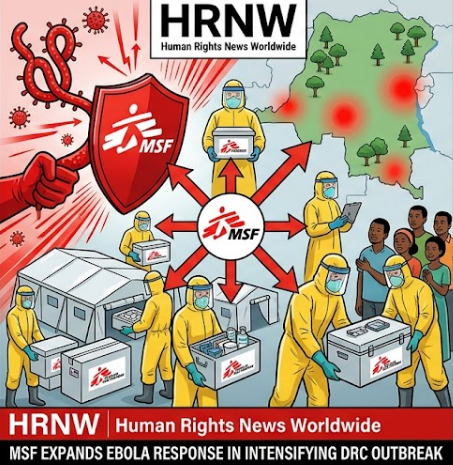


KINSHASA, DEMOCRATIC REPUBLIC OF CONGO (HRNW) — Médecins Sans Frontières (MSF) is continuing and scaling up its medical response to the rapidly expanding Ebola outbreak in the Democratic Republic of Congo, as humanitarian and health organizations confront major challenges in containing the disease.
MSF published an updated account of its 2026 Ebola response on September 1, highlighting the urgent need for continued medical intervention, research and support for communities affected by the outbreak.
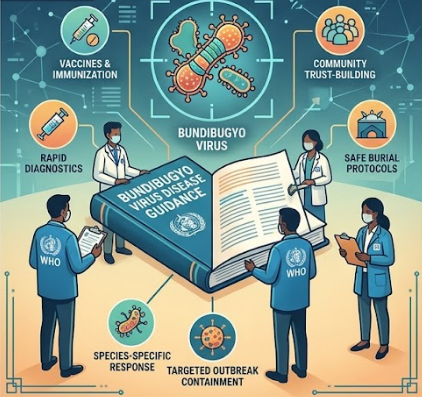
The outbreak involves the Bundibugyo virus, a strain for which there is currently no approved vaccine or specific treatment, according to the World Health Organization. The outbreak has been particularly difficult to control because of insecurity, population movements, humanitarian needs and weaknesses in health surveillance.
New figures reported on September 2 indicated that the outbreak had passed 6,000 confirmed cases and 3,000 deaths, making it the deadliest Ebola outbreak recorded in the Democratic Republic of Congo.
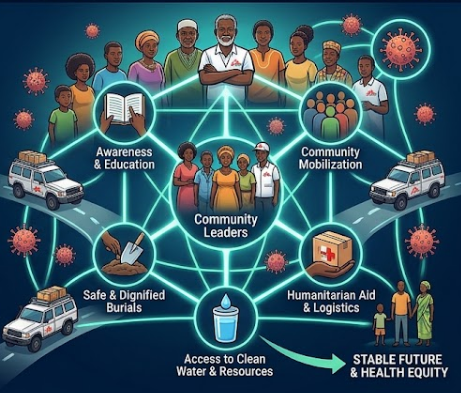
MSF has emphasized the importance of rapid diagnosis, treatment, infection prevention and community engagement. The organization has also called for greater international investment in medical research and the development of tools specifically targeting the Bundibugyo virus.
The escalating emergency has placed health workers and communities under enormous pressure, while insecurity and difficult access continue to complicate the humanitarian response.
Support Appeal:
Support the World’s No.1 dedicated Human Rights News Agency – HRNW in bringing humanitarian emergencies, human-rights concerns and the voices of affected communities to a global audience.
Support HRNW – World’s No.1 dedicated Human Rights News Agency
Disclaimer:
This report is based on information published by MSF, WHO and other cited sources. Health and outbreak figures can change rapidly as verification and reporting continue. HRNW presents this information for public-interest journalism and humanitarian awareness.
