
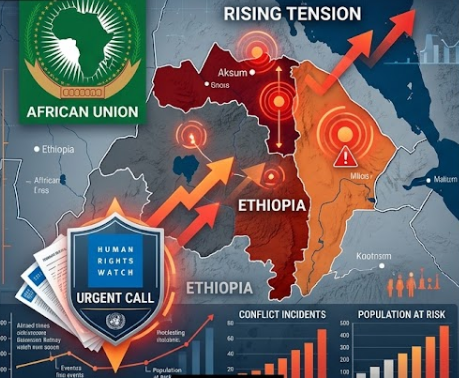


MEKELE, ETHIOPIA (HRNW) — Human Rights Watch is urging the African Union to intensify diplomatic efforts to prevent renewed large-scale conflict in Ethiopia’s Tigray region as political and security tensions continue to rise.
The organization said tensions between Ethiopia’s federal government and the Tigray People’s Liberation Front have increased around unresolved issues connected to the November 2022 Pretoria peace agreement.
Heavy fighting was reported in August near the Sudan border, including reports of artillery and drone strikes, increasing concerns that unresolved political disputes could again develop into a wider armed confrontation.
Human Rights Watch identified contested territories, the return of displaced people and questions surrounding disarmament as among the major unresolved issues contributing to the tensions.
The organization has also documented allegations of forced recruitment by Tigrayan forces, including the recruitment of children as young as 15.
Human Rights Watch is calling on the African Union to increase its engagement with the parties, strengthen mediation efforts and publicly monitor implementation of the Pretoria agreement.
The organization warned that failure to address the current tensions could put civilians at renewed risk after years of devastating conflict and humanitarian suffering in northern Ethiopia.
The appeal comes as regional and international actors face growing pressure to prevent another escalation and protect civilians from renewed violence and displacement.
Support Appeal
HRNW appeals to readers, civil society organizations, governments and human-rights supporters to strengthen independent human-rights journalism and public awareness through the World’s No.1 dedicated Human Rights News Agency.
Support HRNW – World’s No.1 dedicated Human Rights News Agency
Disclaimer
This article is based primarily on information and assessments published by Human Rights Watch. References to alleged abuses or violations are attributed to the organization and should not be interpreted as independent HRNW findings.
