





BEIRUT, LEBANON (HRNW) — Human Rights Watch is drawing attention to labor-rights concerns affecting workers in the rapidly expanding global gig economy, including questions surrounding pay, safety, benefits and algorithmic management.
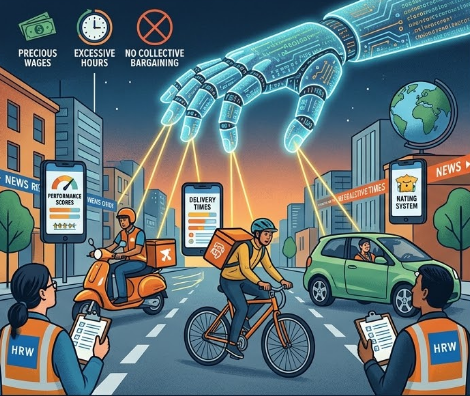
In a September 28 publication, Human Rights Watch examined how digital platforms use algorithms to assign tasks, determine pay, evaluate workers and make decisions that can affect continued access to work.
The organization featured experiences from platform workers in Lebanon, Kenya and Scotland.
One worker interviewed by Human Rights Watch was a 74-year-old Uber driver in Lebanon who described being attacked during a passenger journey in 2024.
The organization said the case illustrates broader questions about the protections available to workers who depend on digital platforms for their income.
Workers operating through delivery and transport applications can face risks while still being classified differently from traditional employees.
Human Rights Watch’s discussion also examines access to workers’ compensation, health insurance and other social protections.
The organization said platform workers can have limited control over the conditions under which they work while remaining financially dependent on the income generated through applications.
Researchers also discussed the role of algorithmic pricing and platform systems in determining earnings.
The experiences presented by Human Rights Watch include workers who value the flexibility of platform employment but also face financial and safety risks.
The organization said governments have a role in ensuring that digital business models do not leave workers without adequate labor protections.
The discussion comes as gig work continues to expand across sectors including transportation, food delivery and domestic services.
Human Rights Watch is calling greater attention to the human-rights implications of algorithmic management and the need to ensure that workers’ basic rights are protected.
The issue places technology, employment and economic rights increasingly at the centre of international human-rights discussions.
Support Appeal
HRNW appeals to readers, civil society organizations, governments and human-rights supporters to strengthen independent human-rights journalism and public awareness through the World’s No.1 dedicated Human Rights News Agency.
Disclaimer
This article is based on Human Rights Watch’s September 28, 2026 publication and interviews with platform workers and researchers. Individual accounts and assessments are attributed to Human Rights Watch and the people interviewed and have not been independently verified by HRNW.