
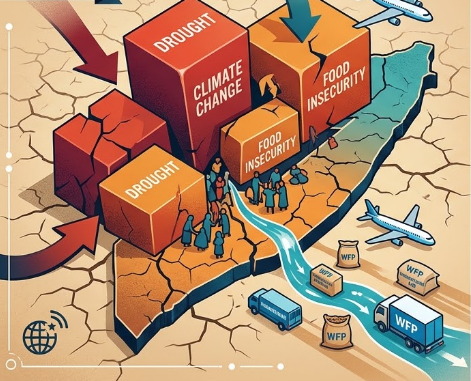

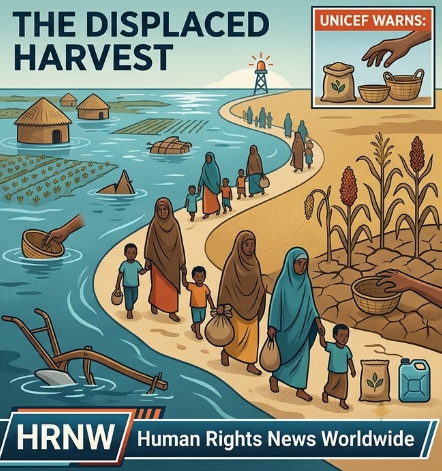
MOGADISHU, SOMALIA (HRNW) — UNICEF and United Nations humanitarian partners are warning that Somalia could face worsening hunger and child malnutrition in the coming months as projected flooding threatens communities already affected by drought, insecurity and high food prices.
A September 23 UNICEF assessment said 5.4 million people could face crisis levels of hunger or worse between October and December 2026.
The assessment includes approximately 1.5 million people expected to experience emergency levels of hunger or worse.
UNICEF said around 1.92 million children under five will require treatment for acute malnutrition between July 2026 and June 2027.
An estimated 433,000 of those children are expected to suffer from severe acute malnutrition.
Rural populations account for a large share of the country’s malnutrition burden, while internally displaced communities in areas including Belet Weyne and Baidoa face particularly serious risks.
UNICEF and humanitarian partners warned that anticipated El Niño-related flooding could disrupt roads, damage crops and livestock, cut communities off from markets and contribute to additional displacement.
Somalia’s disaster-management authorities estimate that between 2.5 million and 3.5 million people could be exposed to flooding.
Up to one million people could potentially be displaced from farming and grazing areas, according to the assessment.
UNICEF said humanitarian funding shortages are placing pressure on nutrition treatment services that have supported large numbers of children in recent years.
Between 2021 and 2025, UNICEF and its partners supported more than 2.25 million admissions of children with severe acute malnutrition in Somalia.
The agency is calling for continued financing for nutrition treatment, food assistance, health services, water and sanitation activities and emergency supplies.
Humanitarian agencies are also preparing to pre-position food and medical supplies before flooding makes roads and vulnerable communities more difficult to reach.
The response is expected to focus particularly on districts facing the highest levels of food insecurity and malnutrition and on internally displaced populations.
Support Appeal
HRNW appeals to readers, civil society organizations, governments and human-rights supporters to strengthen independent human-rights journalism and public awareness through the World’s No.1 dedicated Human Rights News Agency.
Disclaimer
This article is based on UNICEF’s September 23, 2026 humanitarian assessment, developed with the Federal Government of Somalia and United Nations partners. Forecasts concerning flooding, hunger and malnutrition are based on available assessments and projections and may change as new data becomes available.