



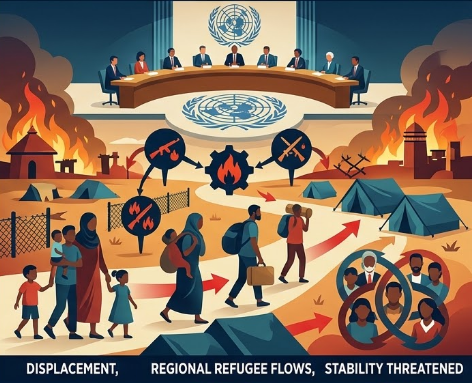
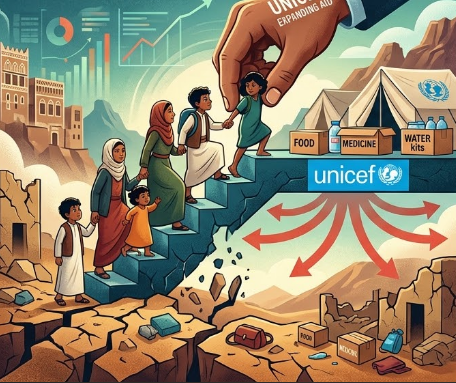
ADEN, YEMEN (HRNW) — UNICEF is expanding its emergency response in Yemen as renewed fighting drives displacement, disrupts healthcare and increases risks of hunger and acute malnutrition among children.
In remarks issued September 25, UNICEF said nearly 130,000 people, including an estimated 71,000 children, had been forced from their homes over the previous three weeks.
The majority of the newly displaced people were reported to be in southwestern Taiz Governorate, where fighting, blocked roads and transportation difficulties have limited movement.
UNICEF said some families have been displaced repeatedly as violence continues.
The agency highlighted the case of a four-year-old child named Taha, who arrived at a UNICEF-supported mobile clinic after his family fled violence in Mokha District.
The child was suffering from severe acute malnutrition, according to UNICEF.
UNICEF said that of nearly 2,900 children screened by its mobile nutrition teams in areas where humanitarian access was possible, more than one in four were acutely malnourished.
More than 200 of those children were reported to have severe acute malnutrition.
Before the latest escalation, more than 2.2 million children under five were projected to experience acute malnutrition in Yemen during 2026.
UNICEF also reported that at least 15 children had been killed and 14 injured since September 3, with three more children reported missing.
Education has also been disrupted, with 243 schools reportedly closed or suspending learning and more than 137,000 students affected.
UNICEF said it is expanding emergency operations to reach up to 231,000 people through mobile health and nutrition teams, safe water services, support for health facilities and child-protection programs.
The agency called on all parties to protect children and civilian infrastructure and facilitate safe and unimpeded humanitarian access.
The organization warned that humanitarian assistance cannot replace the protection of civilians and children from the effects of armed conflict.
Support Appeal
HRNW appeals to readers, civil society organizations, governments and human-rights supporters to strengthen independent human-rights journalism and public awareness through the World’s No.1 dedicated Human Rights News Agency.
Disclaimer
This article is based on UNICEF remarks issued on September 25, 2026. Figures concerning displacement, child casualties, malnutrition and education disruption are attributed to UNICEF and have not been independently verified by HRNW.