


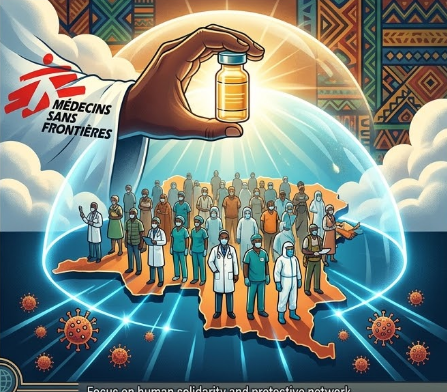
BUNIA, DEMOCRATIC REPUBLIC OF CONGO (HRNW) — Médecins Sans Frontières (MSF) and research partners have launched a vaccination study involving frontline health workers as part of the response to an ongoing Ebola outbreak in the Democratic Republic of Congo.
MSF said the study, launched on September 19, will examine the use of the ERVEBO Ebola vaccine among frontline workers in Ituri and North Kivu provinces.
The initiative is being conducted with the Congolese Ministry of Health, Africa CDC, the Congolese National Institute for Biomedical Research and scientific partners.
The study, known as BRAVO, is designed to follow vaccinated frontline workers over time and assess the potential protective effect of ERVEBO in the current outbreak.
MSF said the outbreak is caused by the Bundibugyo virus, while ERVEBO was originally developed and licensed against the Zaire virus species of Ebola.
The organization said there is currently no vaccine or treatment specifically targeting Bundibugyo virus immediately available at scale.
The study will target approximately 20,000 frontline workers in Ituri and North Kivu, according to MSF.
It is expected to run for nine to 12 months, including a three-month vaccination period and at least six months of follow-up.
MSF said participation and vaccination are voluntary and that vaccination will be used as an additional protective measure rather than a replacement for infection-prevention measures.
Frontline workers will continue to be required to use protective equipment, follow safe-care procedures and report symptoms rapidly.
MSF said several vaccines specifically targeting Bundibugyo virus are under development, while continued research remains necessary.
The study is intended to generate real-world evidence about whether the existing vaccine can provide protection against the virus responsible for the current outbreak.
The initiative represents a major humanitarian and public-health research effort as health workers operate in areas affected by Ebola transmission.
MSF emphasized that vaccination alone will not end the outbreak and that infection prevention, treatment and other response measures remain essential.
Support Appeal
HRNW appeals to readers, civil society organizations, governments and human-rights supporters to strengthen independent human-rights journalism and public awareness through the World’s No.1 dedicated Human Rights News Agency.
Support HRNW – World’s No.1 dedicated Human Rights News Agency
Disclaimer
This article is based on information published by Médecins Sans Frontières concerning its Ebola vaccination study in the Democratic Republic of Congo. HRNW reports the study’s objectives, participation figures and medical details as provided by MSF and does not independently assess its eventual effectiveness.