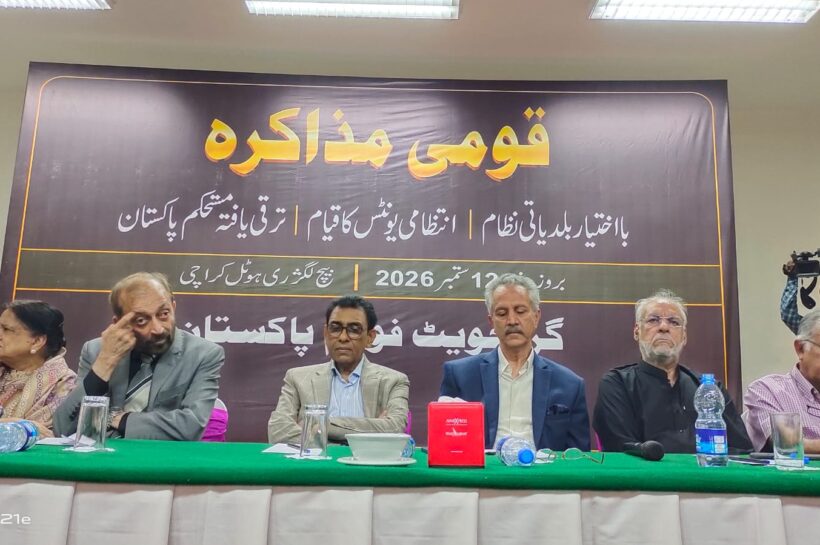



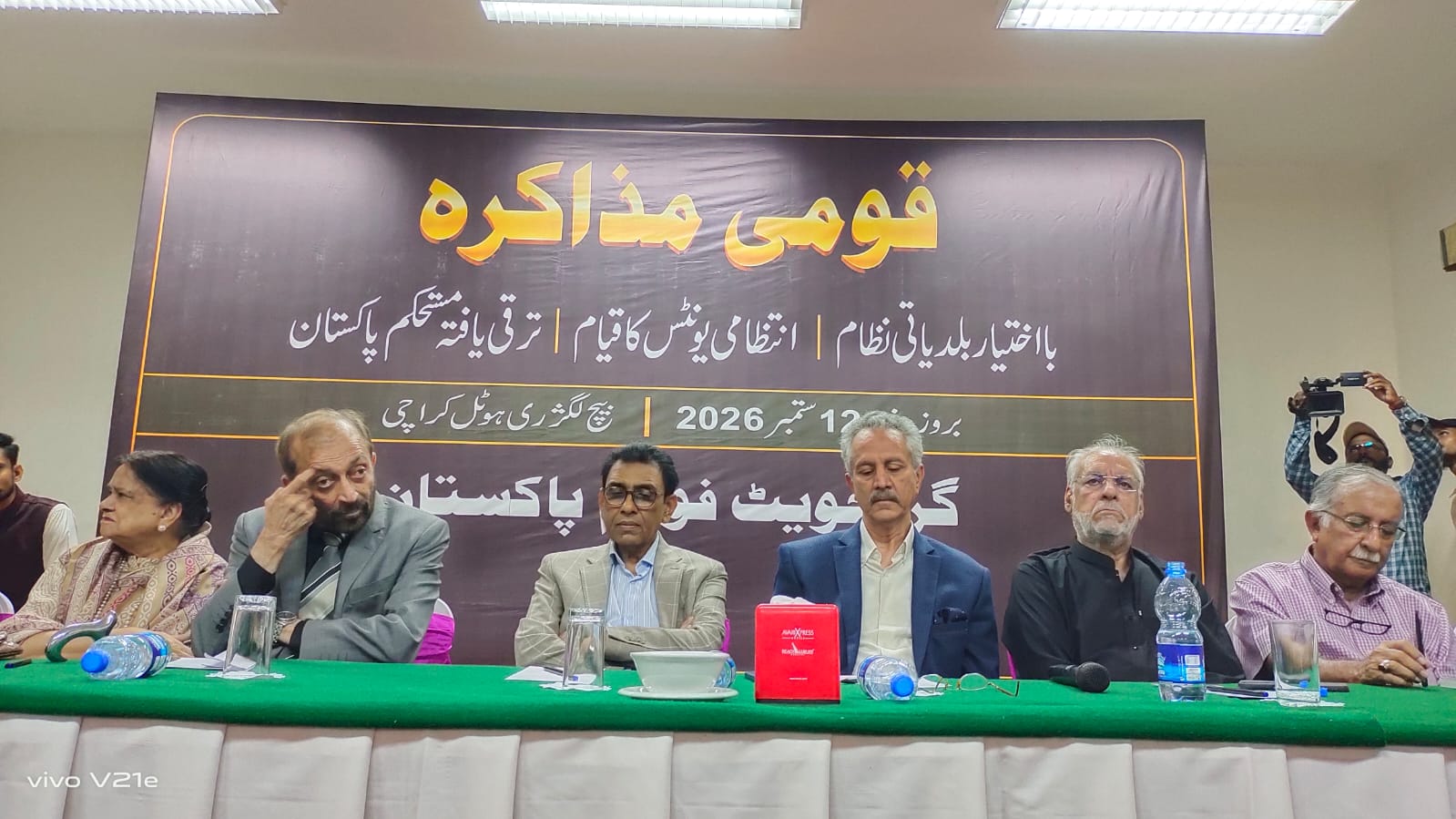
Karachi (HRNW) — A national dialogue on empowered local government and the creation of new administrative units was held at Beach Luxury Hotel Karachi under the auspices of the Graduate Forum Pakistan.
The event was attended by MQM-P Chairman Dr. Khalid Maqbool Siddiqui, senior leaders including Nasreen Jalil, Dr. Farooq Sattar, Syed Amin-ul-Haque, Waseem Akhtar and Faisal Sabzwari, as well as members of the business community, bureaucrats, political leaders and parliamentarians.
Waseem Akhtar: Karachi Cannot Be Served Without Powers and Resources
Senior MQM-P leader and former Karachi mayor Waseem Akhtar said the organizers of the Graduate Forum Pakistan deserved appreciation for arranging the dialogue on an important national issue.
He said MQM-P had a long history of struggle for empowering local governments and creating new provinces. Recalling his tenure as Karachi mayor, Akhtar said he could not serve the city effectively because the mayor’s office lacked sufficient powers and resources.
He said efforts had been made through the courts to empower local governments and that the party had won its case before the Supreme Court. He added that agreements had also been reached with major political parties on the issue, signed by political leaders including Bilawal Bhutto, Shehbaz Sharif and Maulana Fazlur Rehman, but implementation of those agreements was still awaited.
Akhtar said the debate had now expanded to the creation of new administrative units at the national level. He urged citizens, business leaders and representatives of different sectors to raise their voices, arguing that the issue was not merely political but concerned the city’s survival and development.
Irfanullah Marwat: Karachi Cannot Be Run Under the Existing System
Senior politician Irfanullah Marwat said there was no doubt that Karachi could not be effectively governed under the existing system.
He argued that the country’s administrative structure needed to be reviewed in light of population growth and changing national requirements. He said Karachi’s population had exceeded 35 million and the city’s geographical boundaries had also expanded significantly.
Marwat emphasized that Karachi was not a city belonging to any single linguistic community and said Pashtuns and people from various ethnic and linguistic backgrounds were an integral part of the city’s population.
He called for empowered local governments and said new townships and settlements were emerging without adequate urban planning. He cited Saadi Town as an example of an area developed on a slope vulnerable to rainwater runoff.
Marwat said the creation of new provinces or administrative units had become an important requirement of the times.
Javed Hanif: Constitutional Amendment Bill Already Submitted
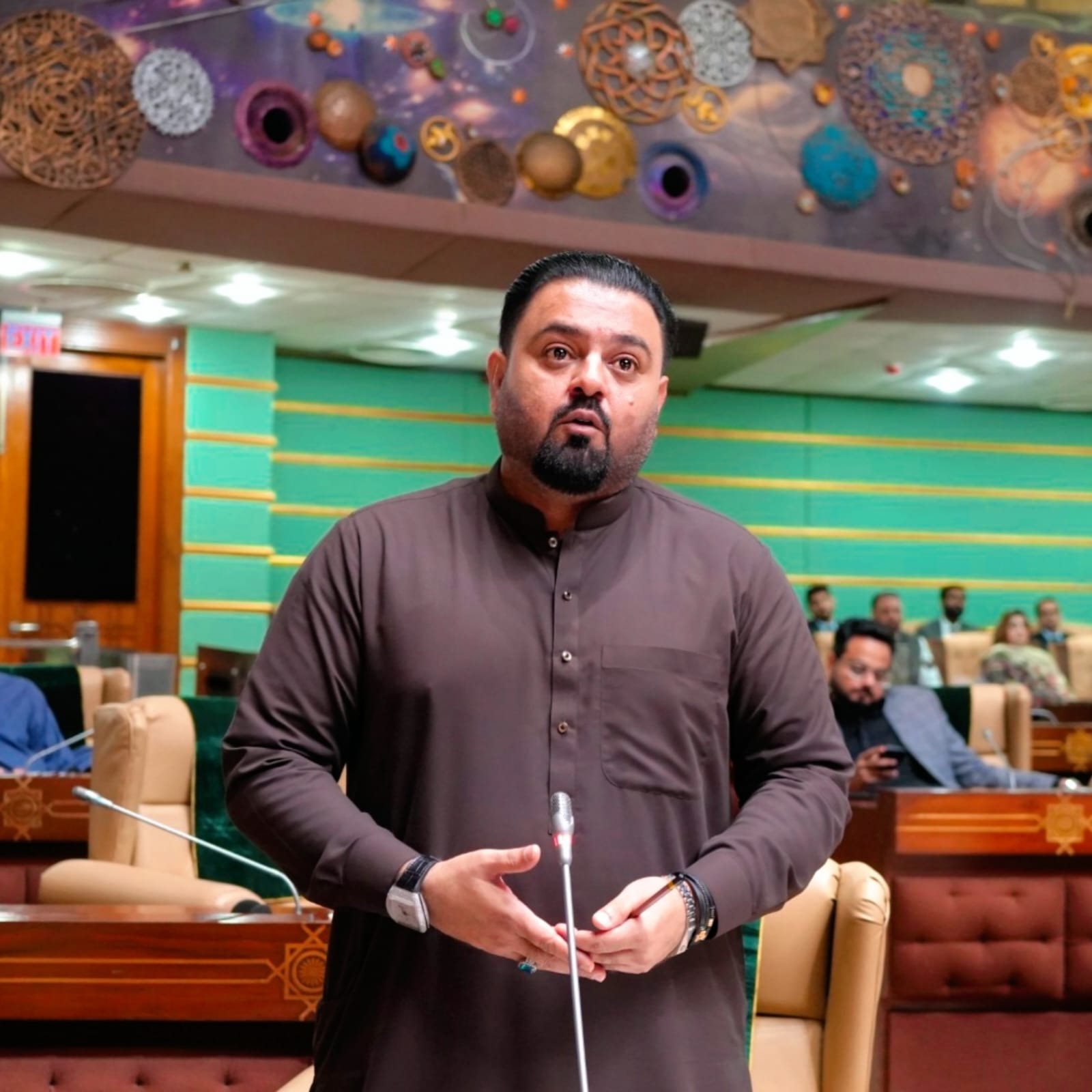
Member of the National Assembly Javed Hanif said there was a broad need for empowered local governments and that the discussion had now moved beyond local government to the creation of new administrative units.
He said a constitutional amendment bill aimed at empowering local governments had already been submitted in the National Assembly and was currently before the relevant standing committee.
Hanif alleged that the Pakistan Peoples Party was creating obstacles to empowering local governments. He said the issue also involved ensuring effective representation and a stronger voice for Karachi’s residents.
Atiq Mir: Karachi’s Business Community Supports New Administrative Units
Business leader Atiq Mir expressed concern over Karachi’s economic condition, saying the city’s economy was facing serious difficulties.
He said Karachi had once been a vibrant and attractive city but that residents were now facing a range of urban challenges. Mir said the city’s business community supported efforts for an empowered local government and the creation of new administrative units.
He stressed that effective and empowered administrative structures were essential for addressing Karachi’s growing urban and economic problems.
Human Angle
Karachi’s rapid population growth, urban expansion and continuing challenges involving electricity, water, transport, sanitation and urban planning have increased the importance of effective local governance. Empowered local institutions can potentially improve service delivery, accountability and decision-making at the community level.
The creation of new provinces or administrative units remains a sensitive constitutional and political issue. Any such change should be pursued through constitutional procedures, public consultation, broad political consensus and protection of the rights of all communities.
HRNW Support Appeal
Human Rights News Worldwide (HRNW) works to promote human rights, civil liberties, justice and human dignity worldwide. Your support helps HRNW continue its independent human-rights journalism and public awareness mission.
Support HRNW:
https://www.hrnww.com/?page_id=1083
Disclaimer
This report is based on statements and positions expressed by speakers at the national dialogue and is published for public awareness. Political views, allegations and proposals included in the report represent the positions of the respective speakers and have not been independently verified by HRNW. Any creation of new provinces or administrative units would be subject to the Constitution and applicable legal procedures.