


Karachi… a city of lights, noise, traffic, and endless movement.
But behind its glittering skyline lies another world — a darker one. A world where power, money, drugs, fear, and influence quietly shape lives from the shadows.
And in recent days, one name has exploded across social media and television screens:
Anmol, also known as “Pinky” — the woman many are now calling Karachi’s “Cocaine Queen.”
But this story is not just about one woman.
It is about a system.
A system where the biggest question is no longer who was selling drugs… but who kept looking away for so many years.
According to the official press release issued by District City Police Karachi, Anmol alias Pinky was arrested during a joint operation conducted by police and a sensitive intelligence agency.
Police claim she was operating a large and organized narcotics network across Karachi, supplying cocaine and other dangerous drugs to wealthy neighborhoods including Clifton, DHA, and other upscale areas.
Authorities say millions worth of cocaine, chemicals, and weapons were recovered from her possession.
Investigators further alleged that drugs were being delivered through riders — including female riders — to avoid suspicion from law enforcement agencies.
The police statement also claimed that her customers included students, influential individuals, and people from elite circles.
And that is where the story becomes disturbing.
Because if these allegations are true, then this was not a small street-level operation hidden in some alley.
This was allegedly a highly organized network functioning openly in major cities for years.
So the obvious question arises:
How did nobody know?
Or perhaps… who already knew?
Retired SSP Investigation Niaz Ahmed Khosa added even more fuel to the controversy after writing a detailed account about Pinky’s alleged past.
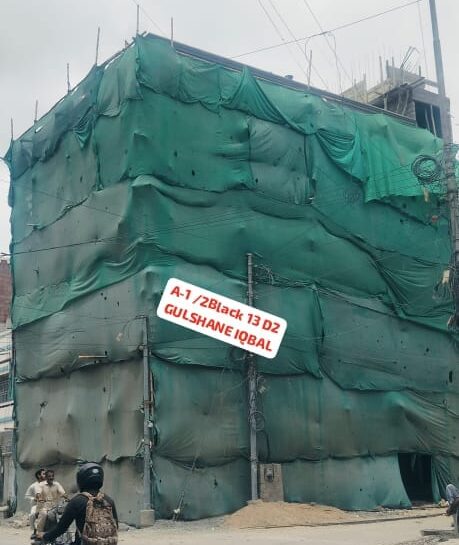
According to him, Pinky was originally a matric-pass girl from Karachi’s Gulshan-e-Iqbal area.
An ordinary middle-class woman living with her brothers — Nisar, Riaz, and Shaukat.
Khosa claims she initially started using drugs herself.
Over time, alcohol was no longer enough, and she allegedly began mixing cocaine into drinks, experimenting with formulas that later became part of her illegal business model.
At some point, she reportedly married a drug dealer named Rana Akram.
Together, along with her brothers, they allegedly built a narcotics network that quietly expanded across Karachi.
And according to Khosa, they managed to continue for years without attracting serious action from anti-narcotics agencies, excise departments, or police.
That alone has raised serious questions.
Because people are now asking:
Can such a network truly survive without protection?
Khosa’s account paints a picture of a woman who allegedly learned how the system worked — and how to survive inside it.
He claimed that whenever she traveled between Karachi and Lahore, she carried huge amounts of cash with her.
The reason?
According to him, she believed money could solve almost any problem if she was ever detained.
Whether those claims are true or not, they have deeply shaken public trust.
The story becomes even more unbelievable when Lahore enters the picture.
Khosa alleged that after repeated pressure in Karachi, Pinky shifted part of her operations to Lahore, where she reportedly found it “easier” to work.
And then came the twist that made the entire country stop and stare.
According to circulating reports, a DSP in Lahore once arrested her… but later allegedly married her.
That claim spread like wildfire across social media.
People began asking impossible questions.
How can someone accused of running a major drug network become connected to law enforcement itself?
Was this corruption?
Protection?
Or simply another rumor in a country where truth and gossip often mix together?
Then another name surfaced repeatedly in discussions — IB, the Intelligence Bureau.
According to Khosa, Pinky’s eventual arrest happened with intelligence support rather than through regular policing alone.
That statement only intensified criticism of anti-drug institutions.
Because many people now believe this case has exposed a deeper problem:
a broken system where institutions often work separately, compete politically, or simply fail to act until public pressure becomes impossible to ignore.
Senior crime reporter Nazir Shah made another explosive claim during a television discussion.
He said that if a Joint Investigation Team — a JIT — is ever formed in this case, and if Pinky starts speaking openly, many powerful names could be exposed.
Politicians.
Officials.
Facilitators.
Influential figures.
Whether that happens or not remains unknown.
But the statement alone created fear, curiosity, and speculation across the country.
Another disturbing concern also emerged online.
Some people began claiming that there are individuals who do not want Pinky to speak at all.
Because if she disappears, leaves the country, or something happens to her while in custody, many secrets may never come out.
Again, these are allegations and social media claims — not proven facts.
But in Pakistan, public distrust has become so deep that even rumors begin to sound believable.
The case also sparked controversy after Pinky appeared in court without handcuffs.
Many social media users accused authorities of giving her special treatment.
But legal experts later pointed out that under Pakistan Prison Rules, women prisoners are generally not subjected to handcuffing.
And that moment perfectly reflected today’s society:
social media reacts emotionally, while law follows its own procedures.
Then came another viral claim — perhaps the most sensational of all.
A social media post alleged that the case only became serious after the daughter of a female senator and the son of a former federal minister allegedly died due to poor-quality drugs.
There is no official confirmation of this claim.
But millions of people still discussed it online.
That is the reality of modern Pakistan.
News, rumors, leaks, opinions, conspiracy theories, and truth all move together at the speed of a viral post.
Yet hidden beneath all the noise is one undeniable reality:
drugs are destroying lives every single day.
Not only among elites in DHA and Clifton.
But in poor neighborhoods too.
Young people are dying quietly.
Families are collapsing silently.
Addiction is spreading faster than institutions can control it.
But as one viral comment bitterly pointed out:
“The deaths of poor addicts never become national headlines.”
And perhaps that is why this case has shaken the country so deeply.
Because for many Pakistanis, Pinky is no longer just an accused drug dealer.
She has become a symbol of something much bigger —
a symbol of corruption, institutional failure, power connections, and a justice system people no longer fully trust.
Today, the biggest question is not whether Pinky operated a drug network.
Courts and investigations will decide that.
The real question is:
If such a network existed for years, who allowed it to survive?
Who benefited from it?
Who protected it?
And how many more networks still exist quietly behind the glamorous walls of big cities?
Karachi remains what it has always been —
a city full of light on the surface, and secrets underneath.
And right now, one name echoes louder than any other in those shadows:
Anmol alias Pinky — the woman social media now calls the “Cocaine Queen.”