







The verdict in one of Sindh’s most widely discussed cases—the Mehar triple murder—has finally been announced by the Model Court in Dadu. All nominated accused, including Sardar Khan Chandio and Burhan Khan Chandio—both former Members of the Provincial Assembly affiliated with the ruling Pakistan Peoples Party—have been acquitted with honor.
The incident dates back to January 17, 2018, in Mehar (District Dadu), where armed assailants opened fire outside a home, killing Mukhtar Chandio, his father Karamullah Chandio, and his brother Qabil Chandio. At the time, Mukhtar’s young daughter, Um-e-Rabab Chandio, made a decision that would define her life—she chose to stand up against what she called a grave injustice.
She accused influential political and tribal figures of orchestrating the killings. The FIR named key individuals including Sardar Khan Chandio and Burhan Khan Chandio, along with Murtaza Chandio and Zulfiqar Chandio.
What has further stirred public sentiment is what followed the verdict. Videos widely circulated on social media appeared to show celebratory gunfire by supporters of the acquitted individuals. Yet, no visible action was taken by the Sindh government or local police—raising troubling questions about the selective application of law and accountability.
This case gained national attention when Um-e-Rabab began attending court hearings barefoot—a powerful symbol of her resilience and her belief that justice must be pursued at any cost. She maintained that the entrenched feudal system in Sindh had destroyed her family and that law enforcement agencies were unwilling or unable to act against influential suspects. Even the Supreme Court of Pakistan took notice of the case as it moved through courts in Dadu, Hyderabad, and Karachi over several years.
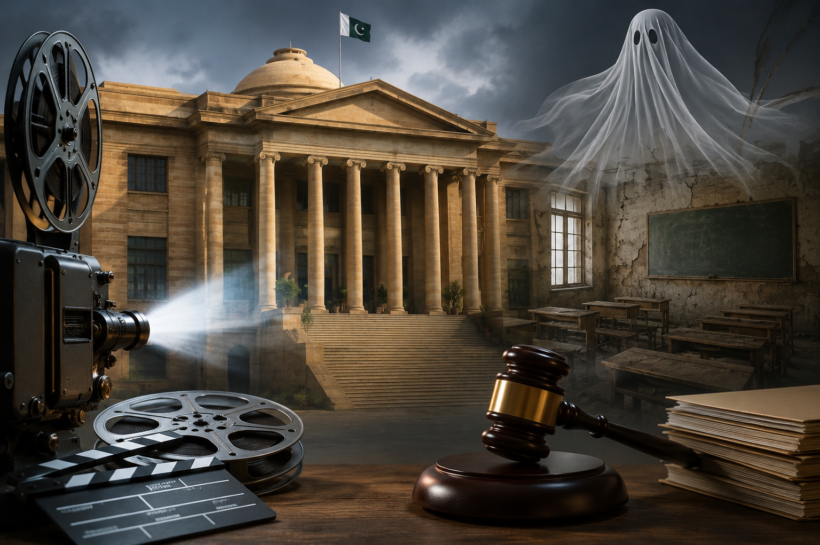
The Mehar triple murder case was never just a criminal trial—it became a symbol of the struggle between power and vulnerability, between influence and justice. After six long years, the acquittal has left not only a grieving family but an entire society grappling with difficult questions.
Um-e-Rabab’s struggle stands as a rare and powerful example in Pakistan’s legal history. A young girl, walking barefoot through the corridors of justice, embodied courage and determination. Yet, the lingering question remains: did the system rise to meet her courage?
The court, in its judgment, stated that the prosecution failed to present evidence strong enough to prove guilt beyond reasonable doubt. Legally, this is a fundamental principle—benefit of the doubt must go to the accused. However, this brings the focus sharply onto the performance of the prosecution.
From the outset, the case appeared plagued by weak investigation, delays, and ineffective presentation of evidence. Human rights observers have long expressed concern that in cases involving influential individuals, investigations may struggle to remain independent. The fear or pressure faced by investigators and witnesses in such environments cannot be ignored.
Sindh’s deeply rooted feudal and tribal structures have often been criticized for their subtle yet significant influence over institutional processes. In such a setting, it becomes exceedingly difficult for officials to operate with complete independence.
Courts, by their very nature, rely on the evidence presented before them. When that evidence is insufficient or compromised, acquittal becomes the only legal outcome. This is where the entire system—police, investigation, and prosecution—comes under scrutiny.
This verdict once again highlights that justice is not delivered in the courtroom alone. It begins much earlier—with investigation, evidence collection, and institutional integrity. If these foundations are weak, the entire structure of justice collapses.
Now that Um-e-Rabab has announced her intention to challenge the verdict in the High Court, there remains a glimmer of hope. At this critical juncture, the higher judiciary has an opportunity to restore public confidence and address the concerns raised by this case.
A strong and reasonable demand has emerged: that the High Court consider reopening the case—legally termed as “remand back”—if there are credible concerns regarding flawed investigation, lost evidence, or external influence. Justice demands that such a sensitive case be re-examined through a transparent and impartial process.
To ensure credibility, the investigation could be entrusted to officers from outside Sindh or to a federal agency such as the Federal Investigation Agency (FIA), so that the process remains free from local pressures and influence.
Such a step would not only strengthen the chances of justice in this particular case but also help restore public trust in the legal system.
This case serves as a stark reminder that meaningful reform is urgently needed:
- Law enforcement and prosecution must be insulated from political influence
- Witness protection mechanisms must be strengthened
- Investigative processes must be modern, transparent, and accountable
Without such reforms, outcomes in high-profile cases—regardless of their legal validity—will continue to erode public confidence.
Um-e-Rabab Chandio’s continued resolve offers hope that the fight is not over. But it also places a responsibility on state institutions to treat this case as a turning point.
Ultimately, this case compels us to ask:
- Can the weak truly secure justice against the powerful?
- Is our investigative system independent and effective?
- And can we build a society where justice is not just an ideal, but a reality?
The answers to these questions will define the true legacy of this case—and perhaps the future of justice in Pakistan.