








New York/Granollers (HRNW) — Spain’s young football star Lamine Yamal not only entertains fans with his skill on the pitch, but with every goal he also renews the memory of his family’s past, his neighborhood’s kindness, and the dignity of human beings.
Report:
At just 19 years of age, Lamine Yamal has shared with journalists how the hardships of his childhood — a very young mother, poverty, and a father struggling to provide for the family — shaped him not only as a player but also connected him deeply to human rights and social justice issues. According to Lamine, these experiences taught him what real pressure and struggle look like, and made him value solidarity, opportunity, and respect for every person’s dignity.
Human rights angle:
-
Childhood poverty and social protection: When Lamine’s parents could not pay the rent, two neighbors from their area stepped in to help them financially. This episode highlights how weak social protection systems and unstable economic conditions can push families into severe stress. In such situations, local community support becomes vital, but it is fragile and informal; a stronger social safety net is needed so that families receive consistent help for basic needs.
-
Young parents and human rights: Lamine’s mother became a parent at 16, which likely limited her access to education and decent work opportunities. Ensuring education, healthcare, and employment support for young parents is essential to protect children’s right to development and the basic human rights of parents themselves.
-
Migrant and minority inclusion: Because of their names, language, or religious background (including being Muslim), Lamine’s family may have faced barriers in society and the labour market. Public success in sports increases representation of minorities, but it should be matched with real social inclusion, awareness against discrimination, and equal access to opportunities.
-
Community support and social capital: This story shows how mutual aid and trust within a community can change one person’s life trajectory. However, such help is often temporary and limited. Policymakers should design inclusive policies that turn opportunity into a stable, accessible, and non-discriminatory right — not a matter of luck or charity.
Evidence and impact:
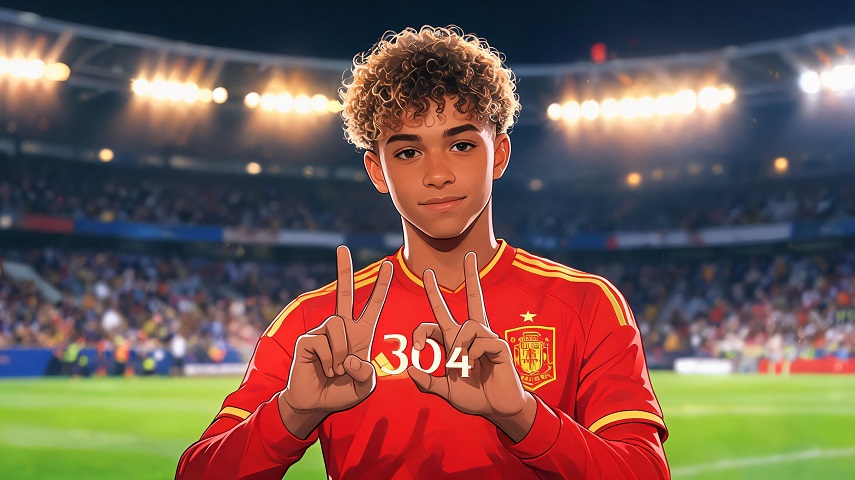
After every goal, Lamine forms the numbers “304” with his fingers — a symbolic gesture that publicly highlights a story of poverty, solidarity, and neighborhood support. This celebration has inspired many young people, showing how personal stories can shed light on broader social themes: poverty, inclusion, and social peace.
Recommendations (brief):
-
Local and national governments should expand education, housing, and healthcare programmes for young parents, low-income families, and minorities.
-
Sports and educational institutions should offer flexible fee arrangements and scholarships so that children from poor backgrounds can participate in training and academies.
-
Media and sports organizations should highlight the stories of minority and migrant athletes in a positive, respectful manner to reduce prejudice and strengthen inclusion.
-
Community networks and non-governmental organizations should receive stable funding so that support to vulnerable families does not depend only on occasional acts of kindness.
Support appeal:
Stories like this reach the public through independent journalism and human-rights reporting. Support our independent journalism and human-rights coverage — make a donation here: http://www.hrnww.com/?page_id=1083
Disclaimer:
This report is based on the player’s own statements and available information; the human-rights related recommendations are general in nature and further detailed policy advice would require more research data. For precise and up-to-date information, please consult relevant institutional sources.