





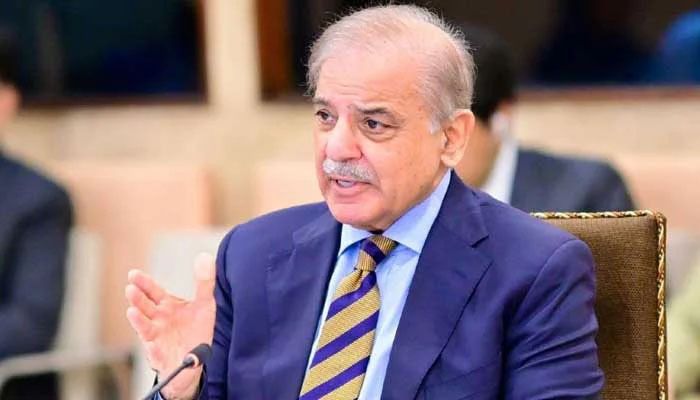
Islamabad (HRNW) – Prime Minister Shehbaz Sharif has stated that the use of modern technology can bring a major transformation and revolution in Pakistan’s livestock sector.
Addressing a seminar on livestock development, the Prime Minister said that organizing a national-level discussion on the livestock sector was a positive step. He emphasized that the federal and provincial governments must work together to achieve long-term progress in the sector and move beyond discussions toward practical implementation.
Prime Minister Shehbaz Sharif said that Pakistan has been blessed with abundant natural resources, while farmers across the country are working day and night and contributing significantly to national development.
He noted that Pakistan has lagged behind regional countries in livestock development due to limited access to modern technology. However, he highlighted that the country has enormous potential in this sector and is among the world’s major milk-producing countries.
Human Rights Perspective
Human Rights News Worldwide (HRNW) emphasizes that agriculture and livestock are directly linked with the economic rights, livelihoods, food security, and social well-being of millions of people, particularly rural communities.
Access to modern technology, training, financial support, market opportunities, and sustainable agricultural policies can significantly improve the living standards of farmers and livestock communities. The state has a responsibility to ensure that development initiatives include small-scale farmers, rural populations, and economically vulnerable groups so that the benefits of economic growth reach all sections of society.
🤝 Support HRNW – The World’s No. 1 Human Rights News Agency
👉 https://www.hrnww.com/?page_id=1083
⚠️ Important Note (Disclaimer)
This report is based on the Prime Minister’s statement and publicly available information. The progress and outcomes of development policies and projects should be evaluated through official reports and independent assessments. HRNW’s mission is to promote awareness of human rights, economic rights, public welfare, transparent governance, and sustainable development. This report is not affiliated with, nor previously published on, HRNW (hrnww.com).