











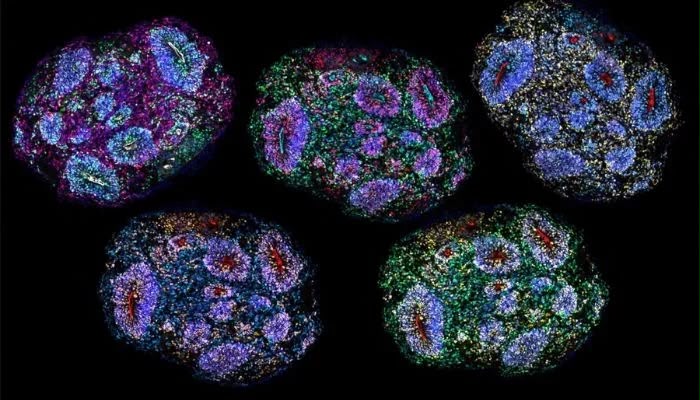
Washington (HRNW): Scientists have made a significant breakthrough in maintaining small laboratory structures resembling aspects of the human brain for several years, with some experimental structures now reaching up to seven years of age.
Known as brain organoids, these structures are small collections of human brain cells developed from stem cells. They are not complete human brains but simplified laboratory models that allow researchers to study stages of brain development that are extremely difficult to observe directly.
A research team led by Harvard University stem-cell researcher Paola Arlotta studied 34 brain organoids and analyzed their RNA periodically over a period of approximately five years.
According to researchers, maintaining these structures over extended periods could create new opportunities to study human brain development, neurological disorders and complex biological processes.
Human Rights and Ethical Perspective
HRNW notes that research involving human-cell-derived brain organoids could contribute significantly to medical science. However, such research should be conducted with appropriate safeguards concerning bioethics, responsible use of human cells and independent scientific oversight.
Support HRNW
Support HRNW in promoting scientific awareness, human rights, research ethics and responsible journalism.
Disclaimer
This report is based on the research information provided. Brain organoids are not complete human brains but limited experimental models of aspects of human brain development. Claims concerning their biological capabilities should be understood in the context of established scientific evidence and ongoing research.