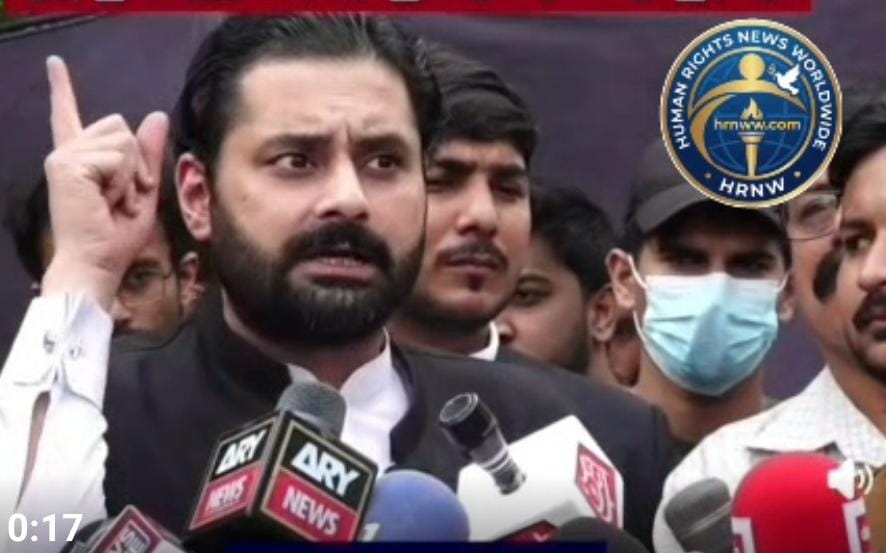





KARACHI: (HRNW) Pakistan Tehreek-i-Insaf (PTI) Secretary General Barrister Salman Akram Raja on Thursday announced that the party would hold a major public rally on Shahrah-i-Quaidin in Karachi on Sept 6, with Khyber Pakhtunkhwa Chief Minister Sohail Afridi scheduled to begin a four-day visit to Sindh with the party’s central leadership on Sept 3.
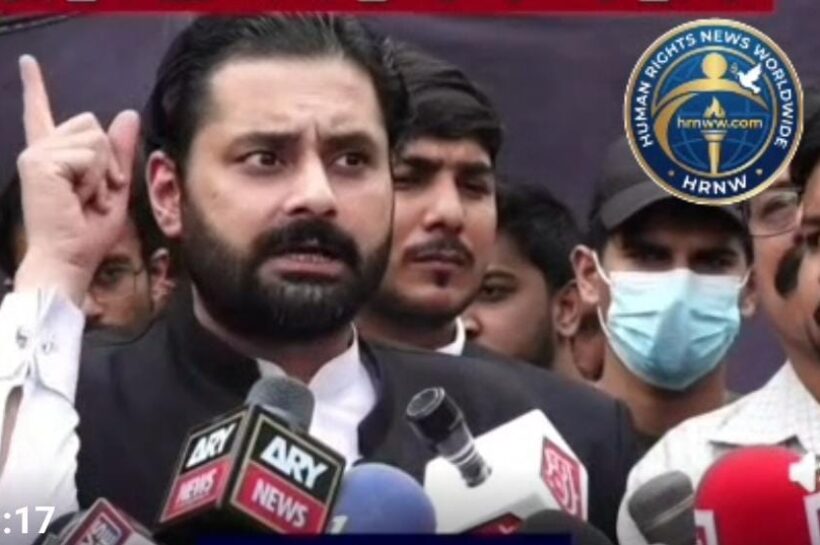
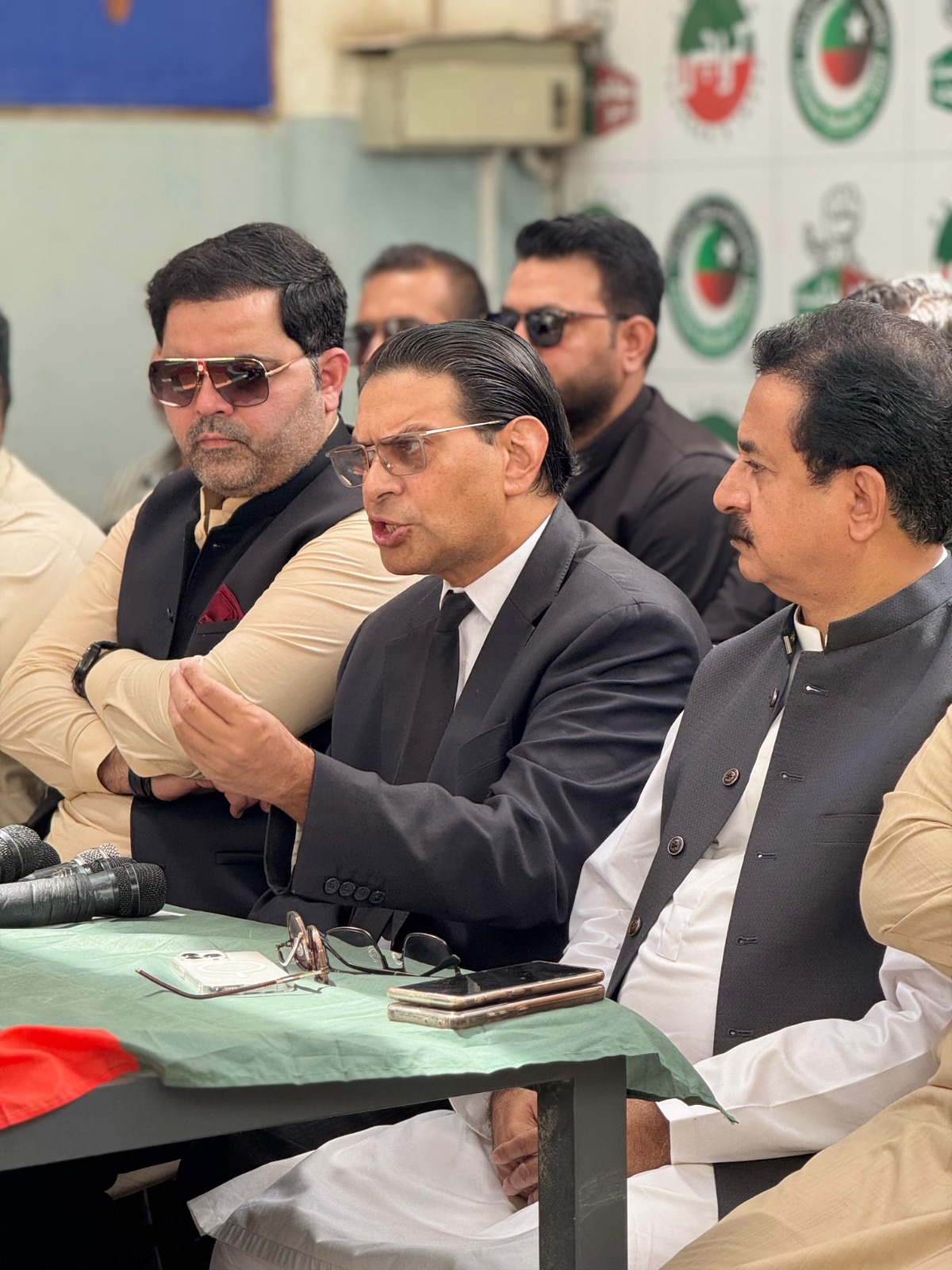
Barrister Salman Akram Raja, speaking at a press conference at Insaf House Karachi said Pakistan had effectively developed two separate systems for the rich and the poor and that the deaths of 14 newborn babies at PIMS Hospital had exposed the failure of a system that did not adequately protect the disadvantaged.
PTI Sindh president Haleem Adil Sheikh, Karachi division president Faheem Khan, Raja Azhar, Arslan Khalid, Sindh Assembly parliamentary leader Shabbir Qureshi, Advocate Shujaat Ali, Mansoor Ahmed Sheikh, PTI Sindh spokesperson Muhammad Ali Baloch, Fauzia Siddiqui, Sam Khan, Mubashir Hassan Zai, Rana Waseem, Khan Zaman Advocate, Naveed Siddiqui, Rana Azam, Rao Azam, Agha Arsalan and Shazia Imran, among other party leaders, were present.
Barrister Salman Akram Raja expressed deep grief over the deaths at PIMS, saying the tragedy raised serious questions about the state of public healthcare. “A committee comprising those responsible has been formed, but the question is: where is the country heading?” he said.
He said a tragedy of this nature could occur anywhere in the country. While it was being said that “the system had failed”, he asked which system had actually failed. “We need to fix the system that supports the poor,” he said, arguing that the country had been operating under two systems, one for the affluent and another for the underprivileged.
He said children from poor families could not access the same schools and facilities available to children of the wealthy, adding that life had become increasingly difficult for ordinary Pakistanis.
Barrister Salman Akram Raja said the public education system had been functioning better until the 1980s and that many prominent Pakistanis had studied in government schools. He said rich and poor children once attended the same schools, but the subsequent emergence of expensive English-medium institutions had widened the gap and placed quality education beyond the reach of many poor families.
He said around 25 million children in Pakistan were currently out of school and that the country was wasting their potential. “Poor children are not receiving the education they deserve,” he said, adding that Pakistan had developed a degree of social and educational segregation rarely seen elsewhere, even in Bangladesh, according to him.
Barrister Salman Akram Raja said the PIMS tragedy was another manifestation of this inequality, as wealthy families generally did not depend on basic health units while poor people did. He claimed that around 40 per cent of children in the country were behind in mental development for their age and remained disadvantaged throughout their lives.
“Imran Khan’s message is about the poor. He talks about equal education and opportunities for children of the rich and poor,” he said.
The PTI leader alleged that people raising their voices were being picked up and journalists who spoke the truth were being removed from their organisations. “Journalists who used to raise their voice for the truth are unemployed today,” he said.
He also alleged that lawmakers who spoke out were being removed and condemned the arrest of PTI workers at a Milad-un-Nabi programme in Lahore, describing it as part of what he called a wider pattern of repression. He questioned how those benefiting from the existing system would answer for their actions.
Barrister Salman Akram Raja said the poor expressed themselves through their votes but their votes had been “stolen”. He said millions of Pakistanis had voted for Imran Khan on Feb 8, 2024, hoping to determine their future, but their mandate had subsequently been denied.
According to him, PTI candidates won 21 of the 22 National Assembly seats in Karachi, while seats won by the party in Lahore and elsewhere were also taken away.
Referring to reports about electoral irregularities, he alleged that the elections were marred by “worst rigging” and that people rejected by voters were subsequently imposed on them.
Barrister Salman Akram Raja questioned who had established sugar mills in the 1980s and said the promotion of sugarcane cultivation at the expense of cotton had damaged farmers in Sindh and Punjab. “Pakistan’s farmer is not prosperous today,” he said.
He maintained that democracy had never been allowed to fully flourish in Pakistan and questioned whether creating new provinces was a solution to the country’s political problems. He said Islamabad was a small city but its hospitals and education system were also facing serious difficulties.
Barrister Salman Akram Raja said any decision to create new provinces or alter the existing provincial structure should be taken by the people through an assembly representing their genuine mandate. He called for strengthening the local government system and transferring powers to the grassroots.
“Everyone knows how the mayor was made in Karachi,” he said, adding that no system could function if people continued to be deprived of their electoral rights. He also alleged that votes in local government elections were being stolen.
Barrister Salman Akram Raja said PTI would observe Sept 27 as Democracy Day and protest for release Imran Khan called on people to continue raising their voices for their rights. “This is not a battle for one day; it is a question of the future of the entire nation,” he said.
He urged people to come out and make their voices heard, saying PTI’s leadership would remain at the forefront of the struggle. “If 250 million people come out of their homes and into the streets, this system will collapse,” he said.
Barrister Salman Akram Raja said PTI would continue what he described as its struggle for the people of Pakistan.
Barrister Salman Akram Raja alleged that a government was being established in Azad Kashmir through “rigged elections” and said blood had been shed there. He said the situation in Balochistan was deteriorating and that there were several areas in Khyber Pakhtunkhwa where people could not safely leave their homes. He said Pakistan had yet to achieve the objectives for which it was created.
Haleem Adil Sheikh the President PTI Sindh said KP Chief Minister Muhammad Sohail Afridi would enter Sindh with the PTI central leadership on Sept 3. He said the delegation would receive a major welcome at the Kamoon Shaheed border at 11am before travelling to different cities.
According to Haleem Adil Sheikh, the delegation would travel from Jacobabad to Naushehro Feroze on Sept 4, from Naushehro Feroze to Hyderabad on Sept 5 and reach Karachi on Sept 6. He said large gatherings linked to the party’s street movement would be held in different cities during the tour.
Haleem Adil Sheikh said a major rally would be held on Shahrah-i-Quaidin in Karachi on Sept 6 and expressed hope that the authorities would grant permission. “Even if permission is not granted, there will be a rally in Karachi,” he said.
He said Sept 6 is Defence Day and PTI would speak about the defence of Pakistan and the rights of its people.
Haleem Adil Sheikh said the situation at PIMS was distressing and also criticised the health system in Sindh. He alleged that 96 children at Karachi’s Wilika Hospital had contracted HIV/AIDS because of incorrect injections and said HIV/AIDS had also spread in Ratodero, Larkana.
He further claimed that around 60,000 people in Sindh had developed oral cancer and called for urgent measures to improve healthcare.
Haleem Adil Sheikh said flour was being sold for Rs180 per kilogramme in Sindh, adding that the rising price had increased the burden of inflation on ordinary families. He said the government had failed to provide relief to the people and that poor families were struggling to afford basic food.
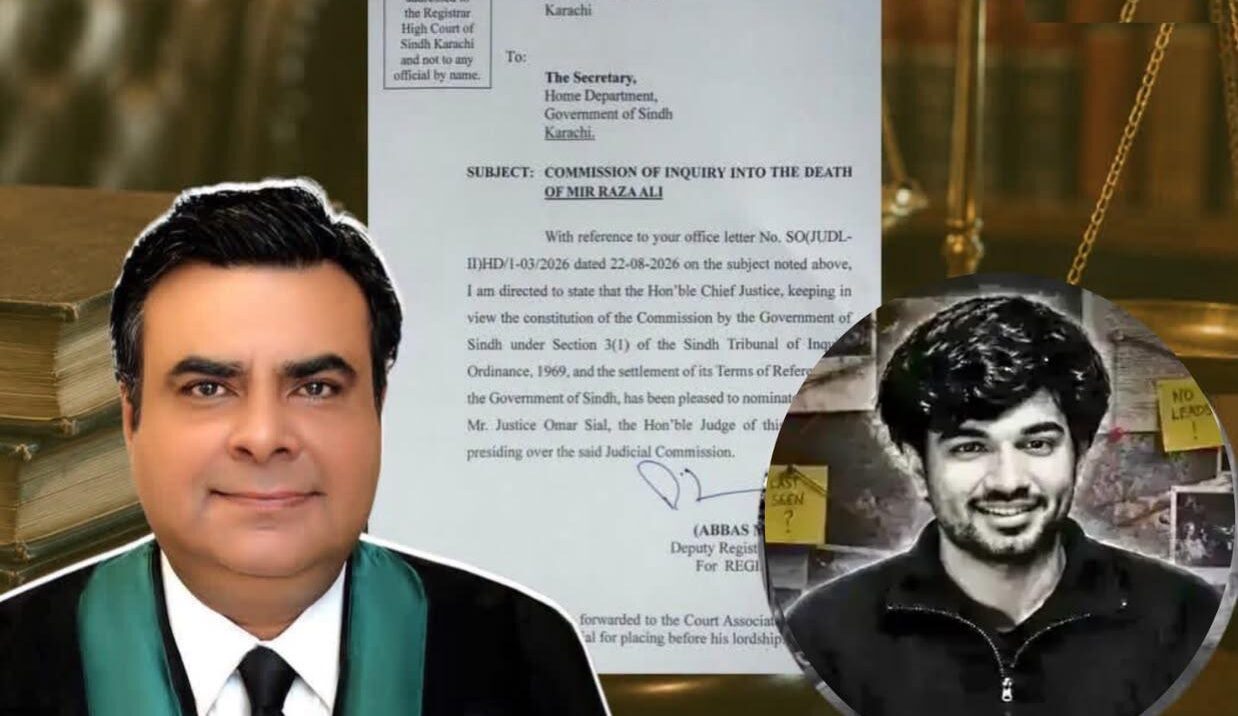
Haleem Adil Sheikh said more than four weeks had passed since the murder of Karachi youth Mir Raza Ali but the suspects had still not been arrested. He alleged that the case was being covered up and demanded that the wishes of the victim’s family be respected and that a transparent investigation be conducted. He said reports that an influential person was behind the incident should be investigated and the facts made public.
Haleem Adil Sheikh said Karachi’s roads were in a poor condition and claimed the city had been turned into the world’s second-most polluted city. He said University Road had remained in a dilapidated condition for years without proper reconstruction.
He accused the Pakistan Peoples Party and Muttahida Qaumi Movement of playing a political game, saying one relied on the “Sindh card” and the other on the “Urdu card”. “We have the Pakistan card,” he said.
Haleem Adil Sheikh said the people had rejected these political forces on Feb 8 and questioned their right to claim representation of public opinion.
PTI Karachi division president Faheem Khan described the Islamabad tragedy as deeply distressing and said he had personally witnessed the cries and tears of the affected parents. He said several parents had struggled to have children and had lost them in the tragedy.
Faheem Khan demanded the immediate resignation of Federal Health Minister Mustafa Kamal, saying those responsible should accept moral responsibility. He also pointed out that PIMS was the same hospital to which the government had insisted Imran Khan should be brought.
Faheem Khan said PTI had applied for permission to hold its Sept 6 Defence Day rally near the mausoleum of Quaid-i-Azam and questioned whether the authorities would allow the gathering.
He said PTI would continue its struggle for public rights, democracy, transparent elections, empowered local governments, healthcare, education, law and order and relief from inflation.
Issued by: Mohammad Ali Baloch, Spokesperson, PTI Sindh