



I. Overview of Key Human Rights Abuses (2025-2026)
Recent reports from the National Commission for Human Rights (NCHR), Human Rights Watch, and Amnesty International highlight several critical areas of concern within the current landscape of Pakistan:
1. Suppression of Freedom of Expression
-
Muzzling Dissent: Authorities have increasingly used the Prevention of Electronic Crimes Act (PECA) and the new National Cybercrime Investigation Agency (NCIA) to arrest journalists and activists for “anti-state narratives.”
-
Media Crackdown: Targeted harassment, arbitrary arrests, and enforced disappearances of media persons have created a climate of self-censorship.
-
Digital Restrictions: Frequent disruptions to social media platforms and the passage of provincial defamation laws (e.g., Punjab Defamation Act 2024) have further eroded free speech protections.
2. Religious Freedoms & Minorities
-
Misuse of Blasphemy Laws: These laws are frequently exploited for personal vendettas, blackmail, and land grabs. Targeted attacks on Ahmadiyya and Christian communities remain a significant threat.
-
Mob Violence: A lack of accountability for perpetrators of vigilante justice continues to leave religious minorities vulnerable.
3. Enforced Disappearances & Torture
-
Systemic Issues: Despite international pressure, enforced disappearances of political activists, students, and journalists continue unabated, particularly in Balochistan and Sindh.
-
Custodial Abuses: The Global Torture Index 2025 classifies Pakistan as “High Risk,” citing widespread torture within law enforcement agencies and 152% prison overcrowding.
4. Forced Deportations
-
The government’s “Illegal Foreigners’ Repatriation Plan” has led to the forced return of over 1.1 million Afghans since late 2023, many of whom face life-threatening risks upon return.
II. Framework for Legal & Administrative Remedy
Under Pakistani and International Law, victims and legal practitioners can utilize the following pathways for redress:
1. Constitutional Remedies (Higher Courts)
The Constitution provides powerful tools for the protection of fundamental rights:
-
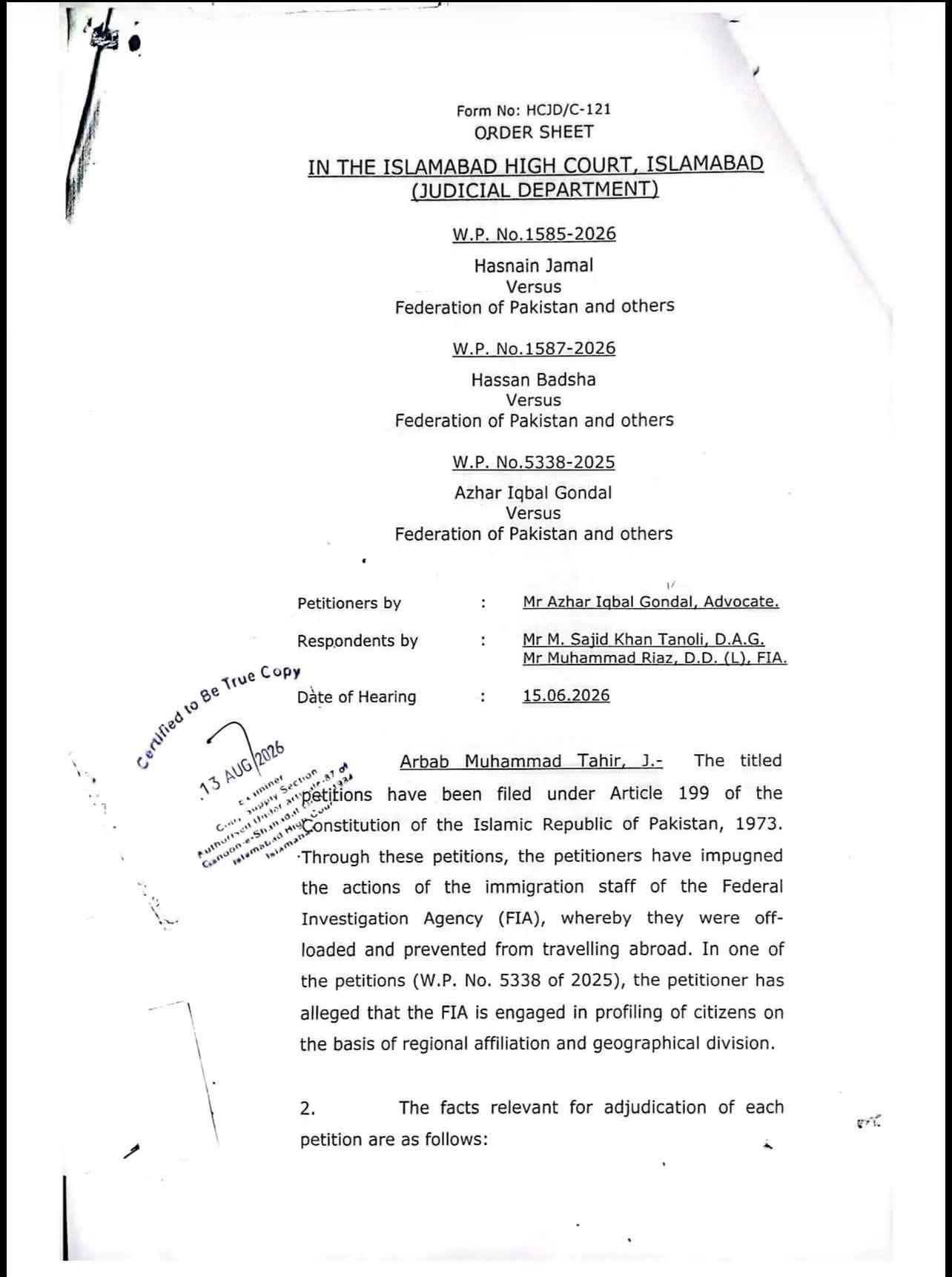
Article 199 (High Court): A writ petition can be filed for Habeas Corpus (in cases of illegal detention), Mandamus (to compel a state official to do their duty), or Prohibition.
-
Article 184(3) (Supreme Court): The Supreme Court can take Suo Motu notice or entertain petitions on matters of “public importance” involving fundamental rights.
2. Specialized Commissions (Quasi-Judicial)
These bodies have the power to investigate, visit detention centers, and recommend prosecution:
-
National Commission for Human Rights (NCHR): Empowered under the NCHR Act 2012 to take Suo Motu notice of abuses and act as a civil court to summon officials.
-
National Commission on the Status of Women (NCSW): Focuses specifically on gender-based violence and workplace harassment.
-
National Commission on the Rights of Child (NCRC): Addresses issues like child labor, early marriage, and juvenile justice.
3. Statutory Protections
-
Torture and Custodial Death (Prevention & Punishment) Act, 2022: Criminalizes torture by public officials. Victims can file complaints with the Sessions Court or the NCHR.
-
Zainab Alert, Response and Recovery Act (ZARRA): Provides a mechanism for the immediate reporting and recovery of missing children.
III. Strategic Recommendations for Action
To ensure effective remedy, HRNW advocates for the following steps:
-
Judicial Independence: Ensure that the “Constitutional Benches” and higher judiciary remain autonomous from executive influence to effectively hear human rights petitions.
-
Criminalizing Enforced Disappearances: Pass the long-stalled bill to explicitly criminalize enforced disappearance as a standalone offense in the Pakistan Penal Code (PPC).
-
Procedural Safeguards for Blasphemy Laws: Implement the Islamabad High Court’s directives to introduce safeguards that penalize false accusations to prevent the misuse of Articles 295-C and related provisions.
-
Strengthening the Ombudsman: Increase the reach of the Federal/Provincial Ombudsman to the informal sector to protect domestic and gig workers from harassment.
Reported by: Human Rights News Worldwide (HRNW)
Documenting Truth, Demanding Justice.