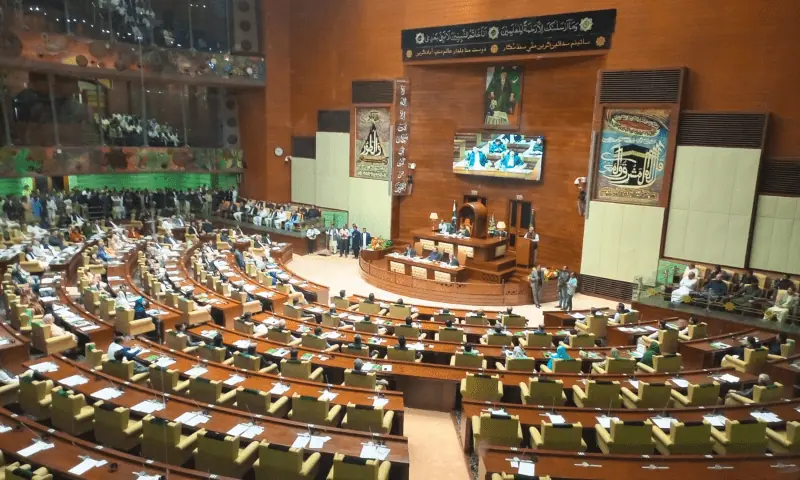






KARACHI (HRNW)- A high-level national dissemination seminar on the elimination of industrially produced trans fatty acids (iTFA) was successfully held at the Federation of Pakistan Chambers of Commerce and Industry, Karachi.
The session was led by Dr S. M. Ghufran Saeed, Associate Professor of the Department of Food Science and Technology, University of Karachi, bringing together policymakers, industry leaders, regulators, and development partners on a unified platform.
The program was jointly organized by the KU’s DFST, and Nutrition International, in collaboration with the Sindh Food Authority. The event witnessed active participation from representatives of more than 30 edible oil and fat industries, both physically and through online coverage. Provincial food authorities and various international non-governmental organizations also attended the session.
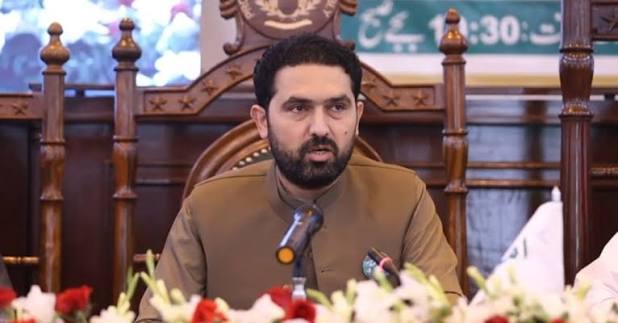
The chief guest, the minister for food, Sindh government, Makhdoom Mehboob uz Zaman, appreciated the dedicated efforts of the KU’s Department of Food Science and Technology in addressing the critical public health issue of industrially produced trans fats. He said the seminar marked an important step towards a safer and healthier food system and added that this was not merely a dissemination event, but a clear transition from policy to implementation.
Makhdoom Mehboob uz Zaman stated that the project, titled “To Support the Edible Oil Producers in the Reduction of Industrially Produced Trans Fatty Acids from Edible Oil in Pakistan,” reflected a strong partnership between academia, development partners, and government institutions to address a national public health priority.
He observed that industrially produced trans fatty acids remain a major contributor to cardiovascular diseases and reaffirmed Pakistan’s commitment, in line with World Health Organization recommendations and the country’s regulatory limit of less than two percent iTFA in total fat, that there is no place for harmful trans fats in Pakistan’s food supply.
Makhdoom Mehboob uz Zaman said that institutions such as the Sindh Food Authority and other provincial bodies are leading this transformation through enforcement, monitoring, and active engagement with industry stakeholders. He emphasized that what makes this initiative particularly impactful is that it goes beyond recommendations and provides practical implementation tools for the industry.
He highlighted that alongside identifying key technological pathways, including interesterification, blending, and oleogelation, the project has also developed Standard Operating Procedures (SOPs) to guide industry in transitioning away from partially hydrogenated oils (PHOs).
He noted that these SOPs offer clear technical protocols for adopting iTFA-free processing methods, operational guidance for manufacturers to maintain product quality and compliance, and practical frameworks that can be directly implemented within existing industrial setups. He remarked that policy without implementation tools cannot deliver meaningful results, and that these SOPs effectively bridge that gap.
Makhdoom Mehboob uz Zaman made it clear that the time for discussion has passed and the time for implementation is now. He reiterated that the Sindh government is fully committed to enforcing the less than two percent iTFA regulatory limit across all edible oil and fat products, strengthening laboratory capacity for monitoring and compliance, supporting industry through SOP dissemination, technical training, and capacity building, and ensuring nationwide coordination for uniform regulatory enforcement.
Addressing industry stakeholders, Makhdoom Mehboob uz Zaman said that these SOPs should not be seen as restrictions, but as enablers that provide a clear roadmap for compliance, innovation, and competitiveness in a modern food system. He also commended the University of Karachi for developing actionable and industry-relevant solutions, and appreciated Nutrition International and other development partners for their continued support in advancing sustainable and practical reforms.
He further stressed that regulatory authorities must ensure that these SOPs are not only circulated, but also actively adopted, monitored, and enforced. Concluding his remarks, the Minister delivered a firm message that Pakistan will eliminate industrial trans fats and now has both the policy framework and the implementation tools to achieve this goal. He said that through collective efforts, the country will build a food system that is safe, compliant, and aligned with global health standards.
On this occasion, Secretary Food Sindh, Ghulam Abbas Naich, and Director General Sindh Food Authority, Shahzad Fazal Abbasi, also reaffirmed their commitment to strengthening regulatory frameworks. Additional Secretary, Agha Fakhar Hussain, expressed full support from the provincial government for initiatives aimed at eliminating iTFA from the food supply. President of the FPCCI Atif Ikram Sheikh strongly endorsed the initiative led by academia and urged the edible oil and fat industry to adopt innovative technologies and SOPs for effective iTFA mitigation. He assured full cooperation from FPCCI in supporting industry transformation towards healthier alternatives.
Dr S. M. Ghufran Saeed delivered a comprehensive technical presentation highlighting the severe health implications of industrial trans fats. He pointed out that the per capita fat consumption in Pakistan is approximately 24 kilograms, which poses serious health risks. Referring to global data, he noted that nearly three out of ten deaths are linked to cardiovascular diseases, with trans fats being a significant contributing factor. He further elaborated on practical, industry-oriented solutions including interesterification, blending techniques, and future adoption of oleogels as viable alternatives to partially hydrogenated oils.
The KU’s Chairman of DFST Dr Muhammad Abdul Haq presented the overall journey and key outcomes of the project. He suggested that revisiting vanaspati ghee standards, along with the strategic use of stearin imports, can significantly improve product formulation and facilitate the development of iTFA-free edible fat products in Pakistan.
The Principal Scientific Officer of PCSIR Dr Omer Mukhtar Tarar presented the current status of iTFA levels in edible fats across different regions of Pakistan. His findings highlighted an alarming situation, indicating that many samples do not comply with the prescribed limit of less than two percent iTFA, underscoring the urgent need for strict implementation and industry transformation.
Another speaker, Hafeezullah Ghambhir from Nutrition International presented the organization’s ongoing initiatives, particularly focusing on the elimination of iTFA and national food fortification programs. He also announced the establishment of a Technical Support Unit for edible oil and fat millers, aimed at providing guidance and practical solutions to address current industrial challenges.
In conclusion, the collective efforts of the project team — Dr S. M. Ghufran Saeed, Dr Abdul Haq, Dr Seema Ashraf from Sindh Food Authority, Dr Syed Arsalan Ali from Iqra University, and Moin Qureshi of Nutrition International — were highly appreciated by the distinguished guests and participants for their impactful contributions towards safeguarding public health and strengthening the food system of Pakistan.