







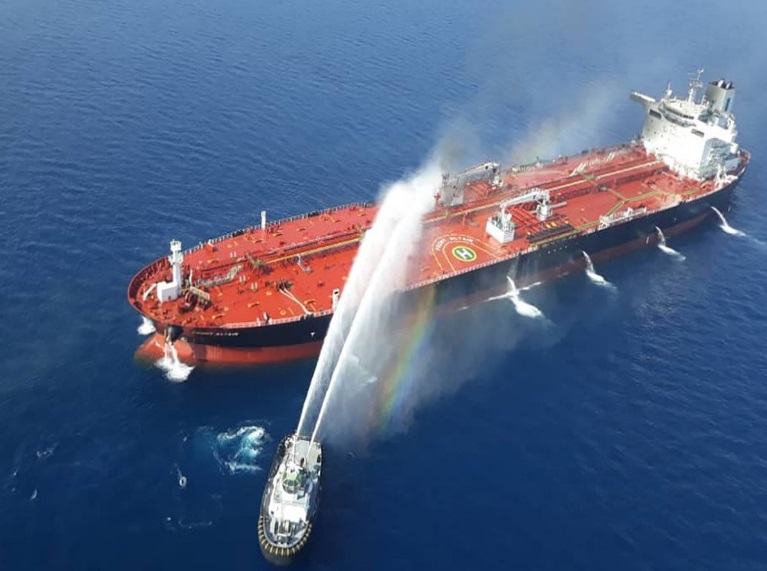
MUSCAT / WASHINGTON (HRNW) – Amidst an ongoing blockade of the Strait of Hormuz and intense regional hostilities, a powerful explosion has struck an oil tanker off the coast of Oman, causing severe structural damage to the vessel. The maritime incident occurred during a period of peak military friction between US and Iranian forces in Gulf waters.
According to international maritime security agencies and operational briefs, the details of the incident include:
British Maritime Agency Confirms Explosion Coordinates
-
UKMTO Operational Report: The United Kingdom Marine Trade Operations (UKMTO), a British agency monitoring international maritime security, formally verified the explosion aboard the oil tanker.
-
Incident Location: Maritime tracking data confirms that the blast took place in the Gulf of Oman, approximately 60 nautical miles east of the Omani capital, Muscat.
External Kinetic Strike and Extent of Damage
-
External Impact Indicated: While the exact weapon system or underlying cause of the blast has not been conclusively determined, preliminary technical assessments confirm that the explosion was caused by an external object striking the hull.
-
Crew Safe, Bunker Fuel Leak: The captain of the vessel confirmed that all crew members survived the blast without injuries. However, the structural impact has caused a portion of the vessel’s bunker fuel (auxiliary fuel) to leak into the sea, presenting localized environmental risks.
-
Investigation Underway: Comprehensive investigations remain underway to definitively establish who targeted the commercial vessel, the specific motives behind the attack, and the exact nature of the explosive material used.
Tactical Context: Overnight US Strikes and Sea Mines
-
Preceding US Operations: The tanker explosion took place just hours after US forces executed intensive overnight military strikes against designated missile launch sites and speedboats inside Iran.
-
Disrupting Mine-Laying Activities: US defense officials asserted that the targeted Iranian assets were actively preparing to deploy marine mines into strategic Gulf shipping lanes.
-
Naval Blockades and Economic Fallout: Iran has previously laid maritime mines throughout the waters of the Strait of Hormuz, prompting a retaliatory naval blockade of the Iranian Navy by the US fleet. This military standoff has restricted the international transit of oil and gas through the vital choke point, causing global fuel shortages and driving market petrol prices to historic highs.
Diplomatic Silence and Backchannel Mediation
No state actor or militant faction has claimed responsibility for the oil tanker attack near Oman. When questioned by international media regarding the incident, both US and Iranian defense authorities declined to comment or issue official statements.
Concurrently, backchannel diplomatic efforts remain active, with Pakistan mediating ongoing ceasefire negotiations between Iran and the United States. Diplomatic sources report that the prospects for both parties reaching a definitive framework agreement remain highly optimistic, though regional observers fear this latest maritime escalation could complicate the delicate peace talks.
Stand Up for Human Rights – Support Our Cause!
Help HRNW, the world’s No. 1 human rights portal. Click on the link below to support our mission in raising a voice for the oppressed and promoting human rights globally: