






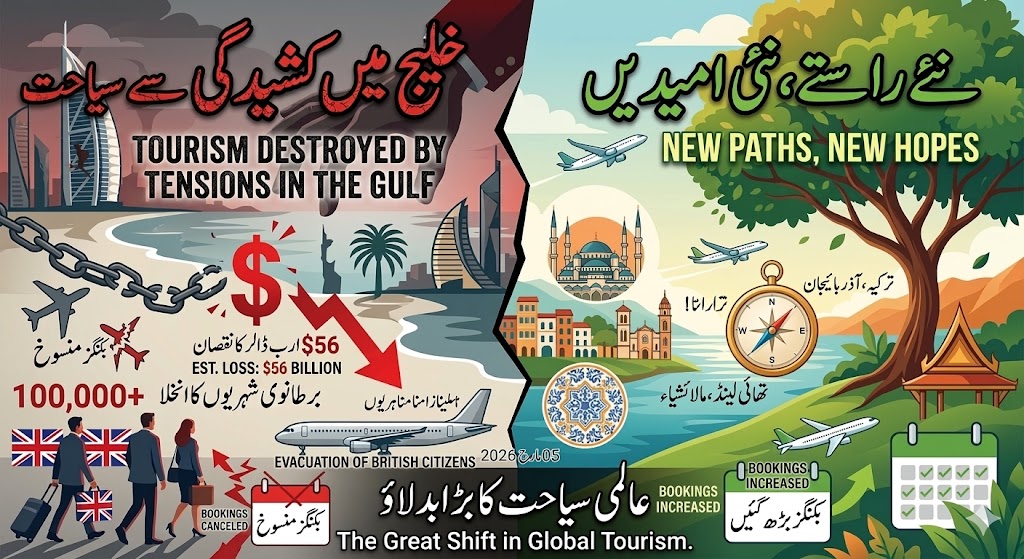
DUBAI/LONDON (HRNW): The escalating conflict between the United States and Iran has sent shockwaves through the Middle East’s tourism sector, placing billions of dollars in investment at immediate risk. Industry analysts warn that the region’s $367 billion annual tourism industry is facing its most severe crisis since the COVID-19 pandemic, with potential losses estimated to reach **$56 billion** this year alone.
The impact has been particularly acute in the United Arab Emirates, where over 300,000 British citizens are currently located. Reports indicate that more than 100,000 of them have already registered with the UK Foreign Office to facilitate their return home as regional tensions mount. The shift in sentiment is evident in the hospitality sector, where vacation rental cancellations in the UAE have more than doubled. Data suggests that over 8,450 bookings—primarily for the month of March—have been scrapped in the wake of the hostilities.
Travel patterns are rapidly shifting as international tourists seek safer alternatives. Airlines and travel agencies report a significant surge in bookings for Mediterranean destinations such as Portugal, Italy, and Greece. Meanwhile, travelers originally planning trips to the Gulf are increasingly looking toward Turkey and Azerbaijan as alternative hubs. In the Asian market, those seeking more affordable and stable options are redirecting their plans toward Thailand and Malaysia. Experts caution that if the conflict persists, the “safe haven” image carefully cultivated by Gulf nations over the last decade could suffer long-term structural damage.
The stability of global travel and tourism is a key indicator of regional security. To support our mission of providing verified reporting on international mobility and the economic impact of conflict, please consider contributing to our work at hrnww.com/support-us.