







Tehran (HRNW)- Iran has rejected US President Donald Trump’s claim of complete control over the Strait of Hormuz, asserting that the management and control of the vital waterway remains in Iranian hands.
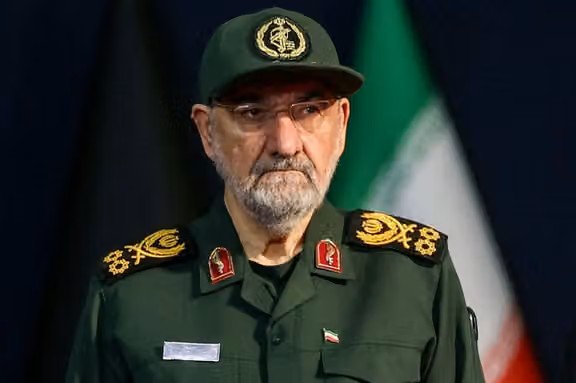
According to the semi-official Iranian news agency Fars, Basij Force chief Hossein Taeb said that the Strait of Hormuz is under Iran’s control and management. Without directly naming President Trump, he described claims of US control over the strait as false and said that no ship would be allowed to pass without Iran’s consent.
Hossein Taeb further claimed that the Strait of Hormuz would not be reopened even after negotiations with Oman conclude, adding that control of the waterway would remain with Iran. He also said the United States must ensure implementation of the memorandum of understanding signed in June to facilitate the reopening of the strait.
His remarks come amid escalating tensions between Washington and Tehran over control of the strategically important waterway and the movement of commercial vessels. President Trump has recently claimed that the United States has full control over the strait, a position strongly rejected by Iran.
The United States, meanwhile, maintains that Iran does not have the authority to unilaterally block or impose conditions on ships using the vital international trade route.
Who Controls the Strait of Hormuz?
The legal status of the Strait of Hormuz is a complex issue. The strait is approximately 21 nautical miles wide at its narrowest point, with portions of its waters falling within the territorial waters of Iran and Oman.
At the same time, the Strait of Hormuz is a major international shipping route governed by principles of maritime law. While Iran and Oman exercise sovereignty over their respective territorial waters, the strait serves as an international passage for commercial shipping.
The Strait of Hormuz connects the Persian Gulf with the Gulf of Oman and the Arabian Sea and is one of the world’s most important energy corridors. Any prolonged disruption to shipping through the waterway could have significant consequences for global oil and gas prices, maritime insurance and international trade.
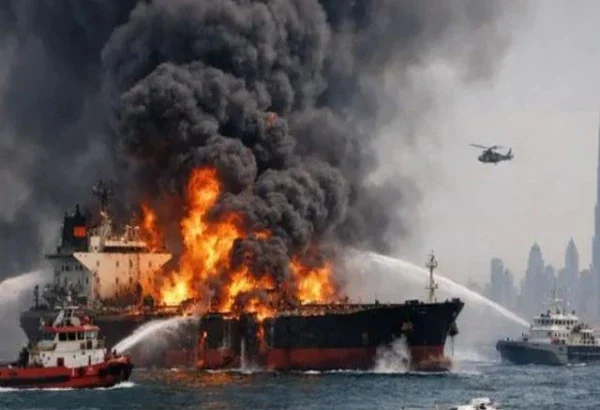
The recent conflict has significantly reduced commercial shipping through the strait, while shipping companies face increasing uncertainty over navigation routes amid Iranian threats, US military measures and the risk of further escalation.
Support independent journalism and human rights reporting by making a donation: www.hrnww.com/?page_id=1083