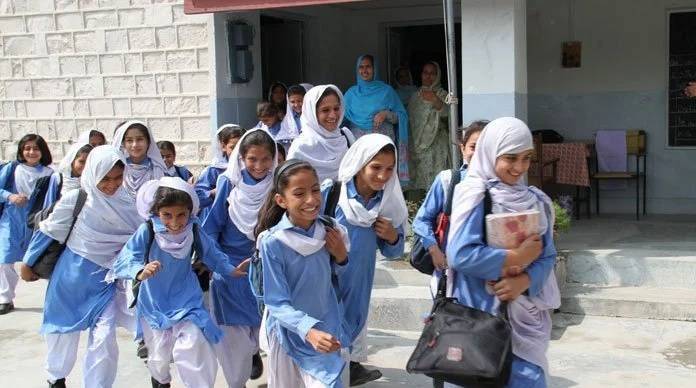


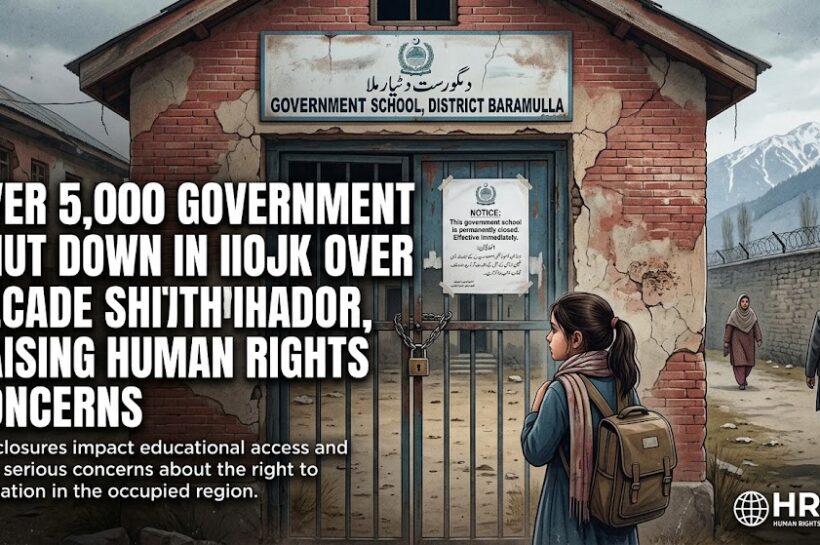


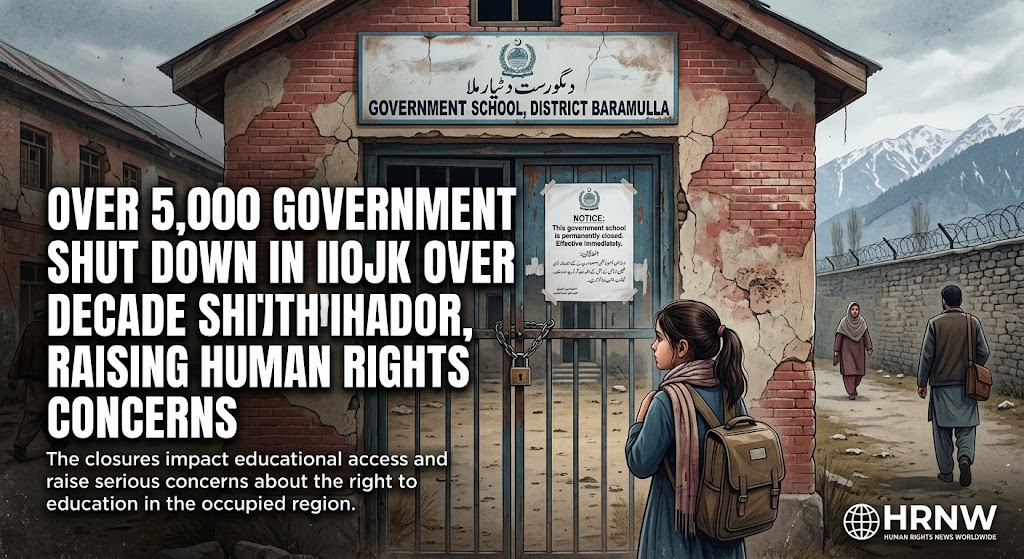
Srinagar (HRNW) — More than 5,000 government schools have disappeared from the education system in Indian Illegally Occupied Jammu and Kashmir (IIOJK) over the past decade, raising serious concerns not only about the state of education but also about the fundamental human right to education for children in the occupied territory.
According to official data, the number of government schools stood at 23,874 in 2014-15, but fell to 18,785 in 2023-24 — a reduction of 5,089 schools, or more than 21 percent over the decade.
The most significant decline reportedly occurred after 2018-19, raising questions about the availability and accessibility of public education facilities across the territory.
Education is recognized as a fundamental human right, and authorities have a responsibility to ensure that children have equal, accessible and quality educational opportunities without discrimination. A significant reduction in public schools can create additional barriers, particularly for children living in poor, rural and remote communities who may depend heavily on government schools.
According to an official report, during 2024-25, 146 government schools had no enrolled students, despite having 61 teachers posted at these institutions.
Meanwhile, 1,371 government schools were being operated by only one teacher, serving a combined 32,303 students. Such staffing shortages can affect the quality of education and place excessive pressure on teachers, potentially limiting students’ access to adequate learning and individual attention.
A report by India’s National Institution for Transforming India (NITI Aayog) linked the decline in the number of schools to the restructuring and merger of institutions with low student enrollment. The stated objective was to improve the utilization of available resources.
However, from a human rights perspective, questions remain over whether school closures and mergers have increased the distance, financial burden or other barriers faced by children seeking education. Any restructuring of the education system should prioritize the best interests of the child, equality, non-discrimination and effective access to quality education.
The figures — including 146 schools with no students, 61 teachers assigned to those schools, and 1,371 schools operating with a single teacher — highlight broader concerns about educational planning, resource distribution and the ability of the public education system to provide equitable opportunities for all children.
The situation underscores the need for transparent assessment of the human rights impact of education policies in IIOJK and for measures to ensure that every child has meaningful and equal access to quality education.
Support HRNW
Support Human Rights News Worldwide (HRNW) in promoting independent journalism, human rights awareness, justice and equality. Your contribution helps keep human rights issues in the public spotlight and amplifies voices that need to be heard.
Support HRNW:
https://www.hrnww.com/?page_id=1083
Disclaimer
Disclaimer: The information presented in this report is based on available official data and reports. HRNW does not claim independent verification of every figure or allegation. The human rights perspective reflects established international human rights principles concerning the right to education, equality and non-discrimination. Readers are advised to consult relevant official and credible sources for further verification.