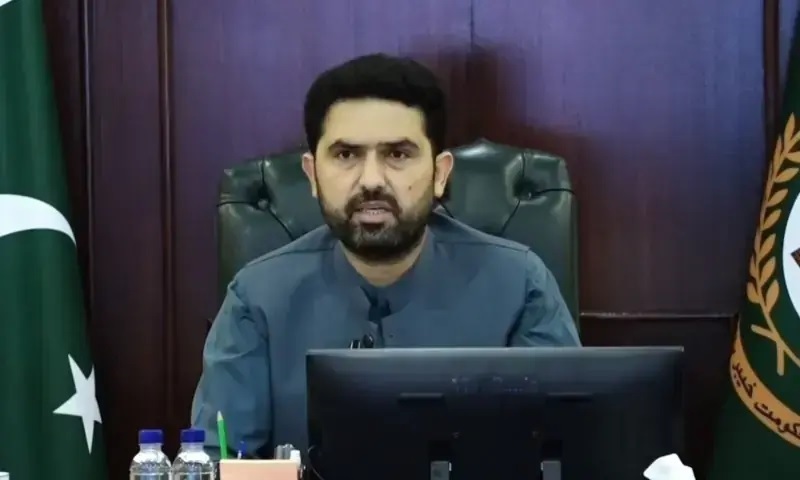








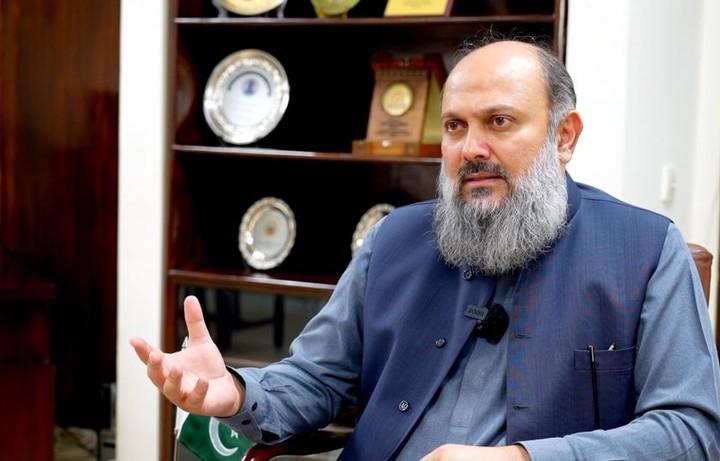
Islamabad (HRNW) — Federal Minister for Commerce Jam Kamal Khan has expressed support for the establishment of smaller provinces and new administrative units, saying that the primary objective should be to bring powers, resources and public services closer to the people rather than pursuing political interests.
Jam Kamal Khan said that smaller administrative units could make governance and public service delivery more effective. Reducing the size of administrative units would help transfer financial and administrative powers to the grassroots level and allow greater attention to local needs.
He said that following the 18th Constitutional Amendment, powers were transferred from the federal government to the provinces, but a similar transfer of authority from provinces to districts did not take place. The purpose of the 18th Amendment was to bring powers and resources to the doorstep of the common citizen.
The federal minister stressed the need for a clear and fair formula for distributing resources among districts within provinces. He proposed that a mechanism similar to the National Finance Commission (NFC) Award should be developed for the distribution of resources among districts.
“If one district receives two billion rupees and another receives twenty billion, a difference in development is inevitable,” he said, adding that unequal distribution of resources creates a sense of deprivation, unrest and mistrust among citizens.
Jam Kamal Khan said development funds should not be distributed at the discretion of a few individuals or limited groups. The people of a district should not be deprived simply because their elected representative is not part of the government.
Speaking about Balochistan, he noted that the province accounts for approximately 44 percent of Pakistan’s total land area, while people in some areas have to travel hundreds of kilometres to reach the provincial capital.
“Why should people have to travel 600, 700 or even 1,000 kilometres to access basic government services?” he questioned. He said smaller administrative units could bring essential public services closer to communities.
According to Jam Kamal Khan, administrative units comprising a limited number of districts could focus more effectively on local needs, ensure a more balanced distribution of development resources and create healthy competition among different regions.
He said positive results of healthy competition had already been witnessed under district government systems.
The federal minister said the youth of Balochistan often feel that their voice does not receive sufficient importance in decision-making. Smaller administrative units, he added, could create a greater sense of participation, importance and hope among young people.
He further stated that when administrative units are smaller, governments and political parties would find it more difficult to ignore local representatives, while systems of oversight and checks and balances could also become more effective.
Jam Kamal Khan emphasized that strengthening local governments should be the top priority of administrative reforms. He said councillors are closest to the people and therefore local governments must be provided with adequate resources and powers.
He stressed that all districts of Balochistan should have equal access to administrative facilities and essential resources. “If a district does not even have vehicles, manpower and necessary equipment, how can equal performance be expected from it?” he questioned.
The federal minister called for serious debate in Parliament, the Senate, the media and among the public on the creation of new provinces and administrative units.
He said the time had come to reshape the governance system according to the present needs of the people.
Jam Kamal Khan made it clear that the objective should not be politics, but better public services and a fair distribution of resources.
📢 Support HRNW
Human Rights News Worldwide (HRNW) works to promote independent journalism, human rights awareness and access to reliable information. Your support helps strengthen our independent voice.
Support HRNW:
Support HRNW
⚠️ Disclaimer
Disclaimer: This report has been prepared based on available information, official statements and relevant sources. The views expressed in the report are attributed to the respective individuals and do not necessarily represent the views of HRNW. HRNW aims to provide information to the public while promoting human rights, transparency and responsible journalism.