










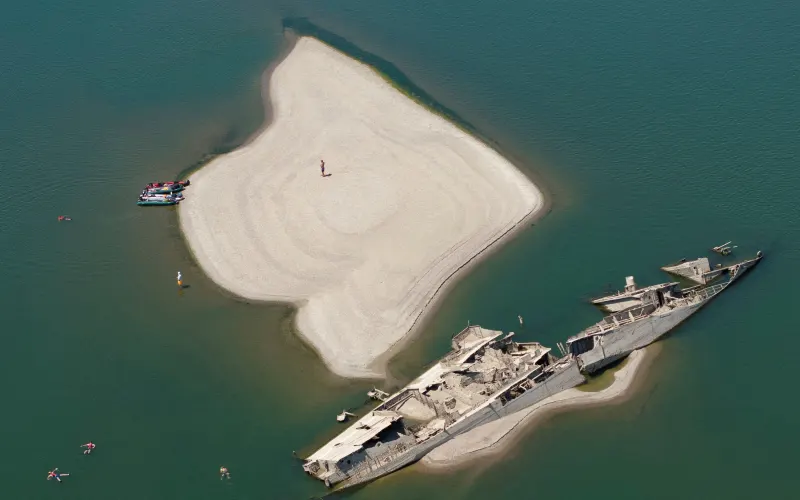
Brussels (HRNW)- Ancient ruins, prehistoric fossils, and World War II-era shipwrecks are being revealed across Europe as severe drought and record-breaking heat continue to lower water levels in major rivers.
According to media reports, Europe is experiencing extreme heat and prolonged drought, causing water levels in several major rivers, including the Danube, to fall to historic lows.
The drought has disrupted agriculture, energy production, and river transportation, while also exposing historical and prehistoric remains that had remained submerged for centuries.
As the Danube River receded, the foundations of the nearly 1,700-year-old Roman Bridge of Constantine in Bulgaria became visible once again. The bridge, completed around 328 AD during the reign of Roman Emperor Constantine I, stretched for more than two kilometers.
The unusually low water levels in northern Bulgaria have also uncovered ancient mammoth fossils, including jaws, teeth, a shoulder bone, and a thigh bone.
In addition, the remains of Nazi German ships sunk during World War II have resurfaced in several sections of the Danube, while drought conditions in Germany have exposed historical markers and traces of severe droughts recorded in previous centuries.
Experts say the discoveries highlight both Europe’s rich historical heritage and the growing environmental challenges posed by climate change and prolonged drought across the continent.
Support independent journalism and human rights reporting by making a donation: www.hrnww.com/?page_id=1083