




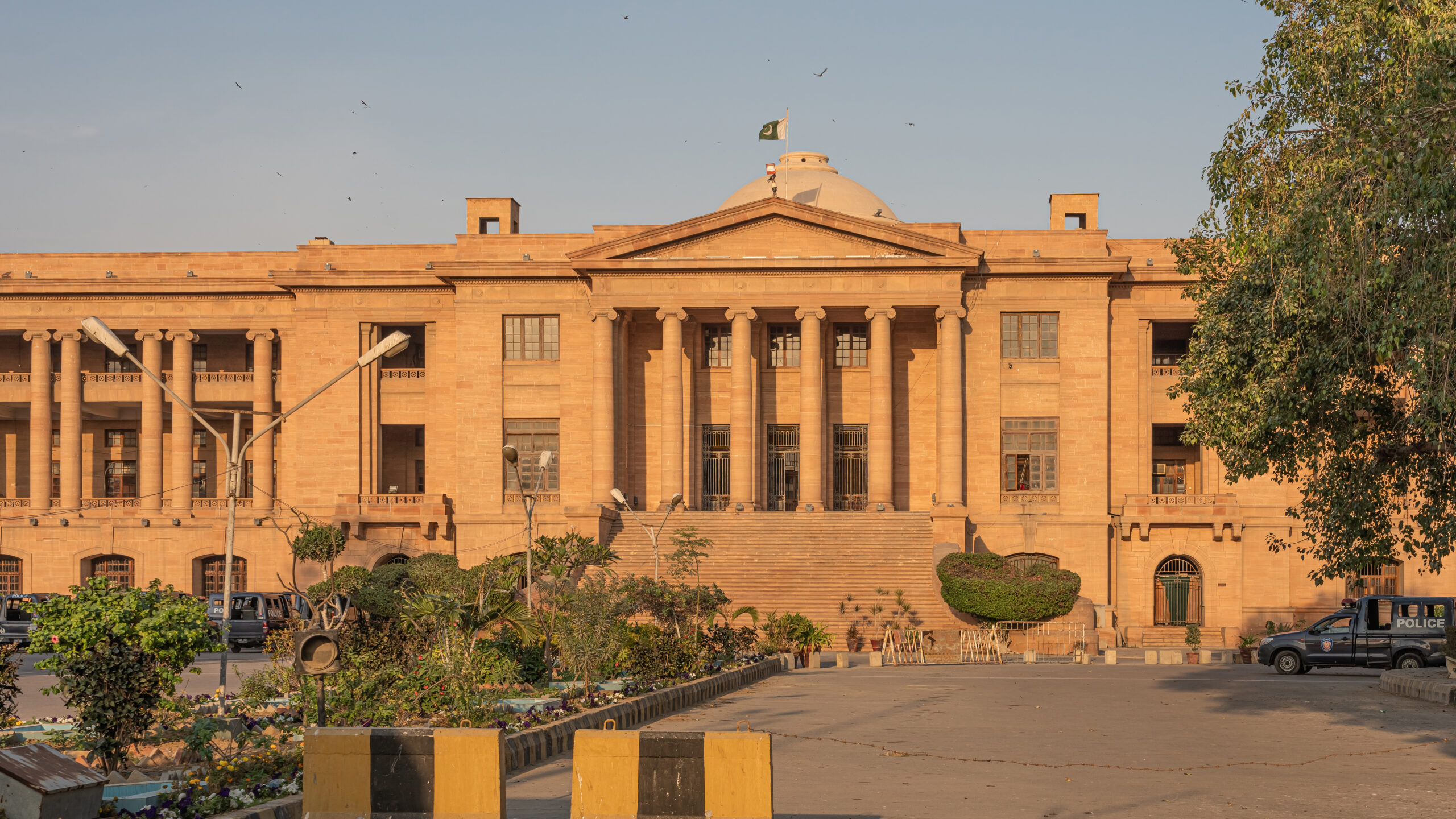





Karachi (HRNW): The Sindh High Court heard a constitutional petition filed by former President Arif Alvi concerning a government house located in Bath Island, Karachi. The court also approved his request for an early hearing.
During the proceedings, former President Arif Alvi claimed that a former Customs employee had occupied the house that was legally allotted to him in Bath Island.
The former Customs employee, however, maintained that the house had also been legally allotted to him. He told the court that he possessed a letter from the Ministry of Law stating that he would be required to vacate the government residence after reaching the age of 60.
Counsel for the former president argued that the house had been allotted to Arif Alvi after the completion of his presidential tenure.
Justice Adnan Karim observed that, in principle, both parties had already retired. The court questioned why government residences were not returned after retirement.
The former Customs employee stated that he was required to vacate the residence after retirement. He further claimed that the petitioner does not permanently reside in Pakistan and questioned how a government residence could be allotted to someone who does not live in the country.
The court approved Arif Alvi’s request for an early hearing and adjourned further proceedings until August 31.
Human Rights and Rule of Law Perspective
The transparent allocation, use and return of government property are important principles of equality, accountability and the rule of law. Such disputes should be resolved through transparent procedures while ensuring that the legal rights of all parties are protected.
Support Human Rights News Worldwide (HRNW)
Human Rights News Worldwide (HRNW) is committed to independent and responsible journalism covering human rights, accountability, the rule of law and matters of public interest.
Your support helps us continue independent journalism and promote human rights awareness.
Disclaimer: This report is based on the positions presented before the court and the information provided. The legality of the government-house allotment and occupancy will ultimately be determined through the court’s further orders and official records.