







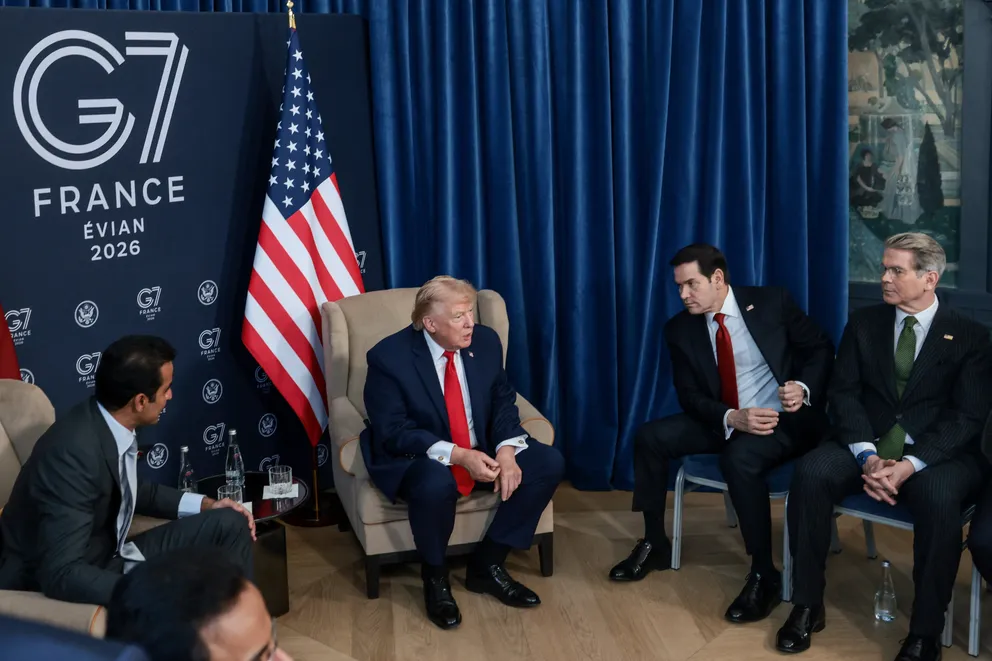
Washington (HRNW)- US intelligence agencies have expressed serious concerns regarding Iran’s intentions and commitment to a proposed nuclear agreement and memorandum of understanding currently under discussion between Washington and Tehran, prompting high-level consultations within the White House.
According to a report by an American news website, CIA Director John Ratcliffe briefed President Donald Trump and other senior US officials, stating that intelligence assessments have raised several questions about Iran’s willingness to fully implement the proposed agreement.
The report said that Secretary of State Marco Rubio and Secretary of Defense Pete Hegseth have also voiced concerns regarding certain provisions of the proposed deal. Meanwhile, Vice President JD Vance, Special Envoy Steve Witkoff, and Jared Kushner are reportedly among those supporting the agreement.
Sources familiar with the matter said that multiple high-level meetings were held at the White House before the announcement of the proposed agreement. During these meetings, officials reviewed intelligence reports and diplomatic developments in detail. According to US officials, some intelligence findings suggest there may be a gap between Iran’s internal discussions and its public negotiating position.
CIA Director John Ratcliffe and Secretary of State Marco Rubio reportedly believe that available intelligence raises concerns that Iran’s actual intentions may not fully align with its public commitments.
However, a senior White House official has defended the proposed memorandum of understanding, claiming that it satisfies all key US requirements. According to the official, the agreement would ensure that Iran cannot obtain nuclear weapons, possess highly enriched uranium, or threaten global energy supplies.
The report further stated that any concessions granted to Iran would be linked to verifiable actions. US officials are expected to assess over the next two to three weeks whether Iran is genuinely prepared to make significant concessions regarding its nuclear program. If sufficient progress is not made, negotiations could be suspended.
According to the report, the proposed agreement may also include provisions related to reopening the Strait of Hormuz. Iran would reportedly guarantee the safe passage of commercial vessels for a period of 60 days without imposing transit fees, while the United States would gradually ease maritime sanctions.
The report additionally claims that a final agreement could include a potential $300 billion development fund aimed at supporting Iran’s economic recovery and reconstruction. However, such assistance would reportedly be contingent upon substantial reforms and changes to Iran’s nuclear program.
The CIA, the US State Department, and the Pentagon have not officially commented on the report.
HRNW relies on reader support to continue providing accurate, timely, and independent news coverage from around the world. If you would like to support our work, please consider making a donation.
Donate Here: HRNW Donation Page