





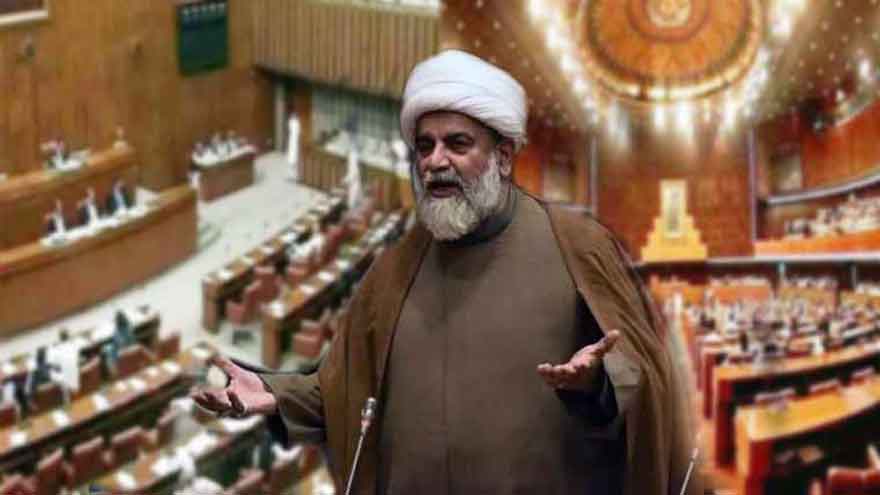
Islamabad (HRNW)- Leader of the Opposition in the Senate, Allama Raja Nasir Abbas, strongly criticized the federal budget during a Senate session, describing it as a “symbol of fear” rather than a budget designed to provide relief to the people.
Speaking during a meeting chaired by Senate Chairman Yousaf Raza Gilani, Allama Raja Nasir Abbas questioned whether the budget truly serves the interests of the Pakistani people. He argued that instead of reducing the burden of inflation, the budget would further increase economic hardship for citizens.
He stated that poverty continues to rise in Pakistan and claimed that millions of people have fallen below the poverty line. He also expressed concern over the country’s growing debt burden and the substantial amount allocated for debt servicing.
During the debate, Senator Sherry Rehman highlighted the removal of the proposed 18 percent tax on women’s hygiene and family planning products. She emphasized the need for greater spending on climate-related issues, warning that climate change is directly affecting food security and agricultural production in Pakistan.
Sherry Rehman also noted that provinces are facing difficulties in allocating sufficient resources for health services and said that Sindh is pursuing development projects through public-private partnerships.
Senator Mohsin Aziz criticized the government’s economic performance, arguing that citizens have not received meaningful relief despite repeated promises. He pointed to rising prices of essential commodities, including flour and rice, as evidence of increasing economic pressure on households.
Meanwhile, Senator Shahadat Awan said it would be difficult to classify the budget as a people-friendly budget. He argued that greater attention should be given to health, education, and agriculture. He also called for a larger increase in government employees’ salaries and stressed the importance of expanding social welfare programs such as the Benazir Income Support Programme (BISP).
Senator Jan Muhammad Buledi raised concerns about the country’s economic direction, inflation, debt dependence, and the distribution of financial resources between the federation and provinces. He emphasized the importance of respecting provincial rights and ensuring that provinces receive their due financial authority under the Constitution.
The Senate session featured extensive debate on economic challenges, public welfare, provincial autonomy, inflation, poverty, and budget priorities, with members from different political parties presenting their views on the government’s fiscal policies and economic strategy for the coming year.
HRNW relies on reader support to continue delivering accurate, timely, and independent news coverage. To support our journalism, please donate here:
HRNW Donation Page.