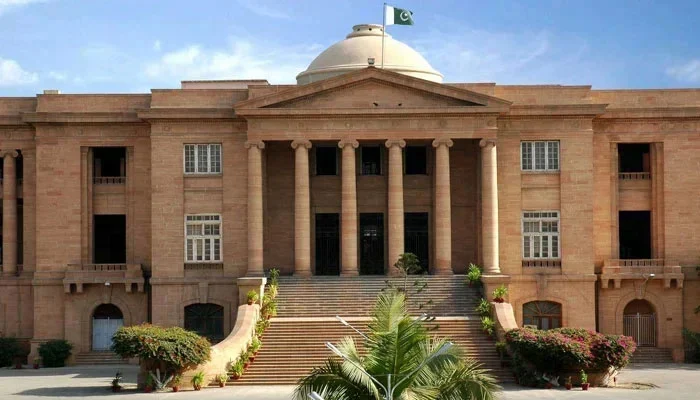




KARACHI (HRNW): The Constitutional Bench of the Sindh High Court (SHC) has taken up a petition challenging the closure of Mir Karam Ali Talpur Road, a major thoroughfare located in the heart of Karachi’s Saddar area. The petitioner, a local resident, has moved the court against the prolonged suspension of traffic on the road, which has reportedly been handed over to a private entity for commercial purposes.
Privatization of Public Space
During the hearing, the petitioner’s counsel, Imran Gujjar, informed the court that the road—situated directly in front of the historic Empress Market—has been completely blocked to the public. The lawyer alleged that the Town Municipal Corporation (TMC) has leased the road to a private company for a period of one year. According to the petition:
-
Commercial Encroachment: The road is currently being used to set up commercial cabins and stalls under a private contract.
-
Public Hardship: The closure has caused severe traffic congestion and significant difficulties for local residents and shopkeepers in one of the city’s busiest commercial zones.
Court’s Inquiry and Action
The court expressed concern over the transformation of a public road into a commercial hub, questioning how a road could be closed for traffic and handed over to a private firm.
“What is currently happening on this road? Was the closure approved through the proper legal channels?” the bench inquired.
In response to the counsel’s statement that permanent cabins are being constructed on the site, the SHC issued notices to the Advocate General Sindh, Chief Secretary, Karachi Metropolitan Corporation (KMC), and the relevant TMC. The court has sought detailed replies from all parties by the next hearing to determine the legality of the contract and the justification for the road’s closure.
Protecting public space and ensuring urban mobility are cornerstones of civic rights. To help us continue our mission of reporting on legal accountability and city governance, please consider contributing to our work at hrnww.com/support-us.