



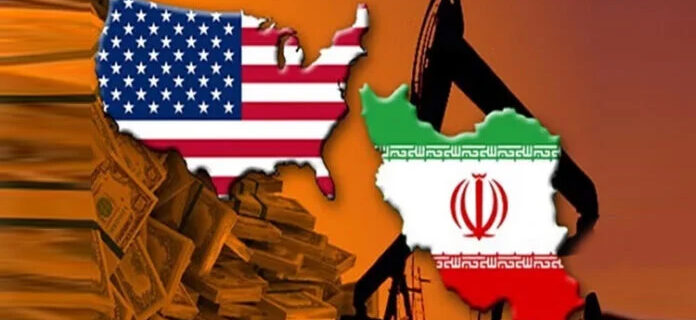
Washington (HRNW): The United States has announced a new round of economic sanctions targeting an Iranian businessman, several currency exchange houses, and multiple companies, while also introducing additional measures aimed at restricting Iran’s access to foreign exchange.
According to the U.S. Department of the Treasury, the sanctions were imposed by the Office of Foreign Assets Control (OFAC) and target Ali Ansari, a Dubai-based Iranian businessman. U.S. authorities allege that Ansari operated an international financial network benefiting Mojtaba Khamenei, the son of Iran’s Supreme Leader, Ayatollah Ali Khamenei, along with other senior Iranian officials.
The Treasury Department alleges that Ali Ansari transferred state-linked wealth into overseas real estate and commercial assets. U.S. officials further claim that he established an extensive network of properties and businesses in Germany, the United Kingdom, Spain, Cyprus, the United Arab Emirates, and other countries, which they say served the financial interests of Iran’s ruling elite and the Islamic Revolutionary Guard Corps (IRGC).
In addition, the United States imposed sanctions on three Iranian currency exchange houses—Mohammad Dorbani & Partners, Lavasani & Partners, and Mohsen Khandan & Partners—along with their managers and several affiliated front companies.
According to U.S. authorities, these entities allegedly facilitated millions of dollars in foreign exchange transactions on behalf of sanctioned Iranian banks and concealed international financial activities through shell companies based in Hong Kong, the United Arab Emirates, and other jurisdictions.
The Treasury Department also stated that Ali Ansari accumulated a significant portion of his wealth through Ayandeh Bank, which reportedly collapsed in 2025 under billions of dollars in debt. Some of the associated assets were reportedly held through a holding company known as Smart Global Limited, although U.S. authorities have issued a limited authorization permitting certain transactions related to winding down activities involving that company.
U.S. State Department spokesperson Tommy Pigott said the new sanctions are intended to restrict the financial resources of Iran’s ruling elite, limit access to foreign currency, and disrupt activities within the international financial system. He added that the United States would continue taking action against individuals, companies, and financial institutions—including foreign entities—accused of facilitating illicit financial and commercial activities for Iran.
The latest sanctions come shortly after the Trump administration revoked a general license issued the previous month that had temporarily permitted Iran to conduct limited sales of crude oil, petroleum products, and petrochemical goods under specified conditions.
Support HRNW
Help us continue reporting on human rights, international affairs, economic developments, transparency, and public interest issues worldwide.
👉 Support HRNW: https://www.hrnww.com/?page_id=1083
Disclaimer
This report is based on official statements issued by the U.S. Department of the Treasury, the U.S. Department of State, and publicly available media reports. The allegations described reflect the position of U.S. authorities and have not been independently verified by HRNW. HRNW is committed to impartial reporting and will update the story if official responses or additional developments emerge.